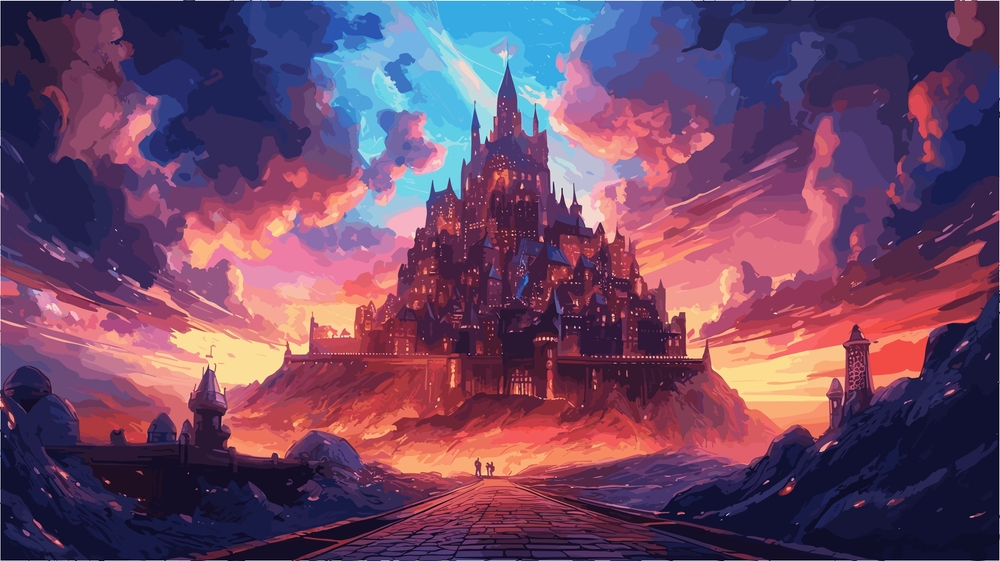
Worldbuilding is the process of creating an imaginative world for a fictional or fantasy story. It can be simple and minimalistic like a single hotel room or as complex and expansive as a wide-open landscape showcasing a fantasy world. It will be a world with its own set of elements and characteristics such as:
- Regulations
- History
- Culture
- Laws of Nature
- Language
- Geography
Incorporating all these elements in the story will make it more intricate and intimate for the readers to accurately understand the whole story. This will also help in providing an immersive experience to the readers by making them feel like they belong with the characters through raw and resonating details.
Worldbuilding crosses genres and subgenres to create a setting fitting for your story, whether it is a rural town or a whole paranormal universe. This also defines the behavior and interaction of characters with their surrounding and provides an overall structure for imaginary world creation.
Exploring the Essential Fantasy Worldbuilding Elements
Here we are going to discuss some of the essential elements that are needed to build a realistic and engaging world that the readers could easily resonate with. In order to make this more realistic, some elements and details rea needed to create a vibrant picturesque surrounding. Some of these are:
- History- History is always going to be the core element of worldbuilding. What is the record of history in your world and the events happening in that era that makes it familiar to the audience?
- Culture & People- The species that will be the main character of your world needs to be identified along with their language. The customs and traditions do they have?
- Physics- The physics of the fictional world you are creating is another aspect that needs to be acknowledged. What kind of character it will have? Magic? Time-travel? Superpowers? Etc.
- Location- Another important aspect is the location of your fictionally created world. Which country is your world going to be set in? The cities or capitals they will be having etc.
- Governmental Laws- Governmental laws and powerful figures in them also need to be established. What kind of law this world will have? Who will hold the power and political factions in it?
- Technology- The advancement of technology in that world is another aspect. What kind of technological equipment they are using in that world and what other tech elements co-exist with the story?
- Geography & Nature- Geography and nature include the surroundings and landscape the story is set. This will include the climate, weather, fauna, and flora of your fictional world map.
- Economy- The economy and trading of your world are also going to be a huge factor in the story. The type of currency do they use? Their trading goods? And other natural resources.
A Step-By-Step Guide To Creating A Fictional World
The world-building process of every project varies depending on the creativity and imagination of your story. Some of the best practices that are going to help you in creating your fictional world are:
Identify Your Methodology
The most important aspect before beginning your writing process is to identify the methodology you will use to start your story. This is also dependent upon the plot of your story and how it unfolds. The 2 famous methodologies of worldbuilding are:
- Top-down Approach- This also known as the outside-in approach is a type of methodology that begins by starting with complex characteristics of the story such as history, geography, climate, etc.
- Bottom-up Approach- This is also known as the inside-out approach which focuses first on creating a small portion of the world that is most relevant before going into other details and elements.
Write Down Everything
The next point that is going to prove to be extremely beneficial for you is to write down everything you have an idea about. Sometimes you have great and unique ideas about building a fictional world that often gets forgotten at the time of writing, so it is important to note them down right then and there.
Those ideas might not make it into the final version of your story, but they are helpful for the process of exploration and coming up with more new ideas.
Inspiration From Past Projects
There are many great fictional worlds in history that are created with great intimacy and attention to detail. Taking inspiration from those projects will evoke your imaginative and creative mind to create more immersive worlds for your story. You can also get help with different elements of your story.
The most memorable worlds are a combination of original ideas and relatable concepts. Researching from many different places can give rise to a unique world.
Begin Through A Story
Always remember to start with a story and not directly with the world. The world is there to complement your story and not vice versa. If the story is engaging and interactive enough, it will instantly make your world more creative and attractive to readers.
A captivating plot and charismatic characters are what captivate the attention of readers and incorporate the process of worldbuilding together.
Use Worldbuilding Tools
Lastly, you can also take advantage of different world-building tools to assist you in this process. A world-building process is quite extensive with millions of tiny details and elements that need to be incorporated to make sense. Make sure that you keep your writing organized through the following points:
- Keep the content in a proper structure.
- Link the related pages with one another.
- Include real-time editing of every page.
- Include a visual graph to give an instant overview.
- All visual elements can be included directly in the document.
3 Best Examples For Building Story Universes
World-building is a crucial part of many genres like science fiction or fantasy. A well-crafted worldbuilding can stay in the minds of readers for a longer period. Some of the examples of great worldbuilding are:
1. The Lord Of The Rings
The Lord Of The Rings which is written by J.R.R. Tolkien is an exceptional example of worldbuilding. The writer pays huge attention to detail and richness of the story by making Middle-earth a living. It focuses on complex elements such as languages, history, and cultures.
2. Game Of Thrones
Game Of Thrones which is written by George R. R. Martin is another great example of world-building. The interweaving of 2 fictional continents exhibits the plot and characters in a perfect way to evoke imagination. The fight and power dilemma between the characters keeps the readers interested.
3. The Stormlight Archive
The Stormlight Archive which is written by Brandon Sanderson is another example of fantasy world creation. It is a great fantasy series that exhibits unique elements such as a wide array of cultures, a magical world, and ecology. These all contribute to making an immersive and complex magical world.
Final Thoughts
All this information will help you clear your mind and provide you with a vision of the type of world you want to build for your fictional story. You can note all these points to make informed decisions and start your world-building process with an experienced mindset.