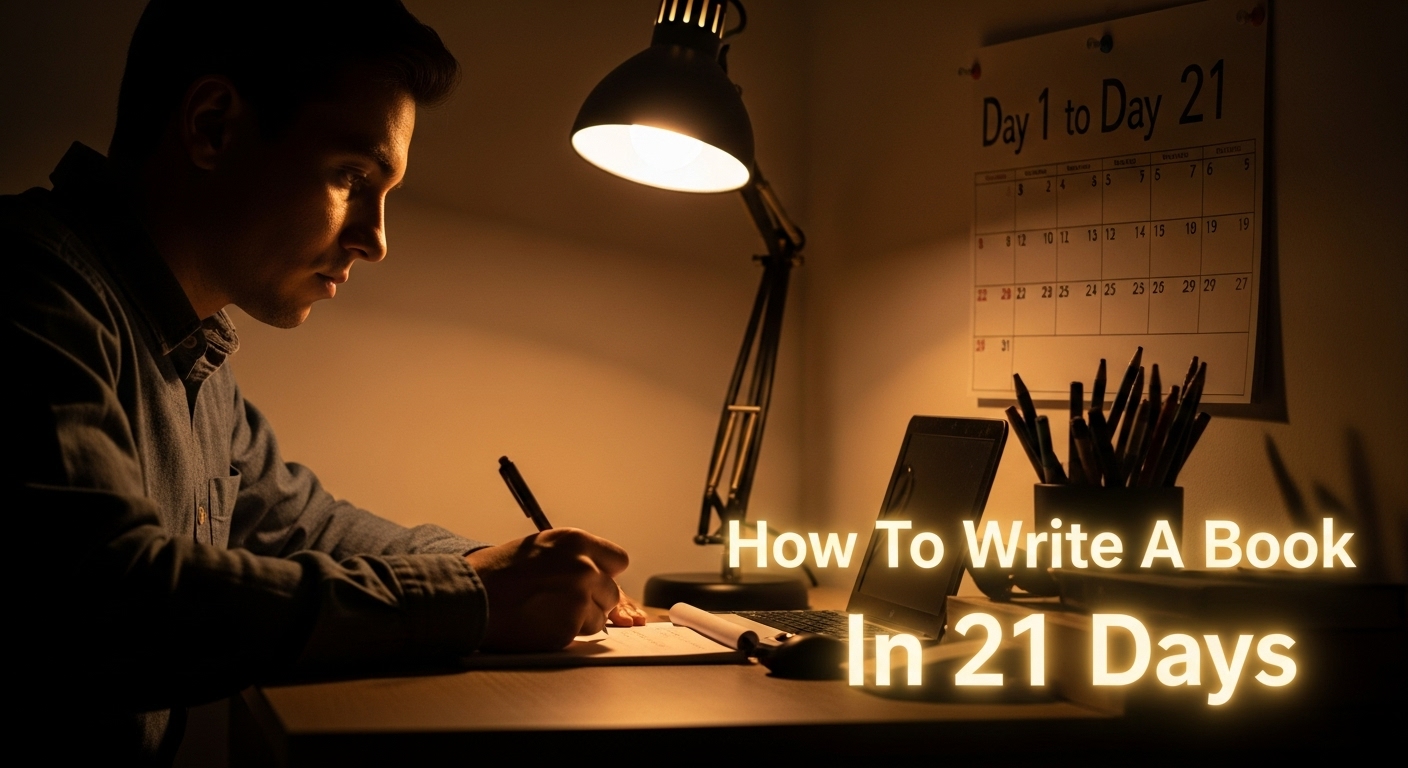
Writing a book in just 21 days may sound like an impossible mission, but it’s more than achievable with the right mindset, a strong plan, and focused execution. Whether you’re aiming to publish your debut novel, finish that long-standing idea, or launch a nonfiction guide, this accelerated timeline is ideal for authors who want to push creative boundaries and meet tight deadlines. In this guide, we’ll walk you through every phase of the 21-day writing challenge—from preparation and drafting to editing and publishing—without cutting corners or compromising quality.
Understand Your Why Before You Start
Before you open your writing software or notebook, ask yourself: Why am I writing this book in 21 days? Is it to beat procrastination? Do you have a marketing or seasonal launch deadline? Are you exploring a writing challenge for discipline? Understanding your motivation will give your writing journey clarity and focus, especially during moments of doubt or fatigue.
Day 1–3: Planning, Outlining, and Prepping
Writing a book fast doesn’t mean skipping the planning phase. The first three days are critical for laying a foundation that will carry you through the next three weeks.
Choose Your Genre and Topic
Decide early on what kind of book you’re writing—fiction, nonfiction, memoir, guidebook, etc. This decision affects your tone, pacing, and structure.
Develop a High-Level Outline
For fiction: sketch out your beginning, middle, and end. Know your main characters, their arcs, and the central conflict.
For nonfiction: break your topic into chapters or sections, and jot down key points or lessons you’ll cover in each.
Set Daily Word Count Goals
To write a 50,000-word book in 21 days, you’ll need to write roughly 2,400 words a day. Adjust according to your goal but aim for consistency over perfection.
Prepare a Distraction-Free Writing Environment
Clear your writing space, put your phone away, and choose your tools—whether that’s Google Docs, Scrivener, or a classic notebook.
Day 4–17: Writing the First Draft (The Execution Phase)
This is the heart of your 21-day writing journey. The goal during this stretch is to write—without overthinking, self-editing, or worrying about grammar.
Stick to the Outline But Stay Flexible
Let your outline guide you, but don’t be afraid to veer off if inspiration strikes. Just make sure any changes serve your story or message.
Use the Pomodoro Technique
Work in focused 25-minute sessions with 5-minute breaks. After four sessions, take a longer break. This prevents burnout and keeps your brain sharp.
Avoid Editing While Writing
Fight the urge to go back and fix sentences. Your focus now should be getting the story or content out. You’ll polish later.
Write Anywhere, Anytime
Make use of idle time—dictate notes while commuting, jot ideas in a notebook at lunch, or write short bursts on your phone when inspiration strikes.
Push Through Creative Blocks
If you’re stuck, skip the scene or chapter and come back later. Writer’s block shouldn’t stall your momentum.
Day 18–19: First Round of Editing
Once your first draft is done, it’s time to refine. These two days are about turning raw words into a coherent manuscript.
Read Your Book Aloud
This helps catch awkward phrasing, repetitive words, or dialogue that doesn’t flow naturally.
Revise for Structure and Clarity
Make sure the pacing is tight and the message or plot makes sense. In nonfiction, check for logical flow. In fiction, ensure that character motivations and actions align with the story arc.
Use Editing Tools (Cautiously)
Grammar tools can help you catch surface-level mistakes but don’t rely on them for deep revisions. Focus on logic, transitions, and overall readability.
Trim the Fat
Cut redundant paragraphs, tangents, or filler dialogue. Every word should serve a purpose.
Day 20: Beta Reading and Professional Editing
Even under a tight deadline, a second pair of eyes is invaluable.
Share with Beta Readers
Give your manuscript to 1–3 trusted beta readers and ask for feedback on pacing, clarity, and tone. Be clear about your time constraint so they can respond quickly.
A professional editor—especially one who offers express or rush services—can perform a quick but valuable review. Some offer structural edits, while others specialize in line editing or proofreading. Choose according to your budget and needs.
Incorporate Feedback
Take what resonates and improve your manuscript. Don’t try to please everyone, but do stay open to constructive criticism.
Day 21: Final Polish and Publishing Preparation
You’re almost there. The final day is for last-minute fixes, formatting, and preparing for publication.
Final Proofread
Do a fresh read for grammar, punctuation, and formatting errors. Focus on presentation now that the structure is solid.
Format Your Book
Depending on your publishing route (self-publishing, digital, or print), use tools or templates to format your manuscript correctly. This includes margins, fonts, chapter headings, and page numbers.
Create a Compelling Book Cover and Blurb
These are crucial to attracting readers. You can use book design services or simple online tools. The blurb should be concise, engaging, and representative of your content.
Choose a Publishing Path
You can self-publish digitally (eBook or print-on-demand), submit to a traditional publisher, or work with a hybrid publishing service. Each has its benefits depending on your timeline and goals.
Upload and Launch (Optional)
If your goal is to publish by Day 21, you can launch on platforms that offer quick approvals. Otherwise, take an extra day or two to build a proper marketing plan for your release.
Editing, Writing, and Publishing Services You Might Use
Even with a 21-day goal, professional support can enhance your final product. Consider:
- Developmental Editors – Ideal for structural advice on your manuscript, especially for plot or pacing issues.
- Line Editors – Help with sentence-level clarity, flow, and word choice.
- Proofreaders – Essential for catching typos, grammar errors, and formatting issues.
- Book Formatters – Can help make your manuscript look professional in both digital and print formats.
- Cover Designers – A visually compelling cover can significantly improve your book’s visibility.
- Publishing Consultants – Can assist in choosing the right publishing platform, handling ISBNs, copyright, and marketing materials.
All of these services can be found independently or through comprehensive book production agencies. Even under a time crunch, investing in one or two areas—especially editing—can elevate your book from rushed to polished.
Is Writing a Book in 21 Days Realistic?
Absolutely—but it requires discipline, organization, and realistic expectations. Not every book has to be long or complex to be impactful. Short novels, novellas, business guides, how-to books, and memoirs can all be completed within this timeframe if you stay focused.
What matters most is that you commit to the process, manage your time wisely, and don’t let perfectionism paralyze your creativity.
Final Thoughts
Writing a book in 21 days isn’t about rushing for the sake of speed—it’s about committing to a deadline and showing yourself what you’re capable of. With a clear plan, a consistent routine, and a willingness to revise, you can transform your idea into a finished manuscript in just three weeks. Whether you’re aiming for self-publishing or submitting to traditional publishers later, this method gives you a fast start and a strong foundation. The key is to begin with belief and finish with intention.
FAQs
Q1: What is a realistic word count for a 21-day book?
A: Aim for 40,000–50,000 words. That breaks down to about 2,000–2,400 words per day.
Q2: Can I edit and write at the same time?
A: It’s better to focus on writing first, then edit after the full draft is complete to maintain momentum.
Q3: Is self-publishing a good option for 21-day books?
A: Yes, especially for fast publishing. Many authors write and self-publish short guides or novellas on this schedule.
Q4: How do I stay motivated every day?
A: Break the process into smaller goals, reward yourself, and remind yourself why you started.
Q5: Do I need professional editing if I’m on a tight deadline?
A: While optional, even a light professional review or beta read can dramatically improve your book.