When Twilight hit shelves in 2005, few predicted it would become a cultural touchstone. Yet Stephanie Meyer’s debut novel, written during quiet hours as a stay-at-home mom, rewrote the rules of YA fiction. It wasn’t just a story about vampires—it was a story about desire, choice, isolation, and first love, set against a brooding, ethereal backdrop. If you’re looking to write a book that channels that same haunting, addictive energy, you’ll need more than just a vampire and a girl. You’ll need emotional magnetism, vulnerability, and a strong sense of atmosphere.
Let’s break it down step by step.
Write What Feels Like a Personal Obsession
One of the reasons Twilight worked was because it read like a story Meyer needed to tell. Her emotional investment bled through every page. Readers didn’t just experience Bella’s feelings—they absorbed them.
To emulate this:
- Don’t chase trends—dig into what fascinates you, even if it feels strange or niche.
- Write a story you’d want to read on your loneliest day.
- Let your own emotional questions or fantasies fuel your scenes—do you long for safety, danger, passion, rebirth?
This kind of obsessive energy gives your writing urgency, and your readers will feel it.
Build a World That Feels Tangible, Even If It’s Unbelievable
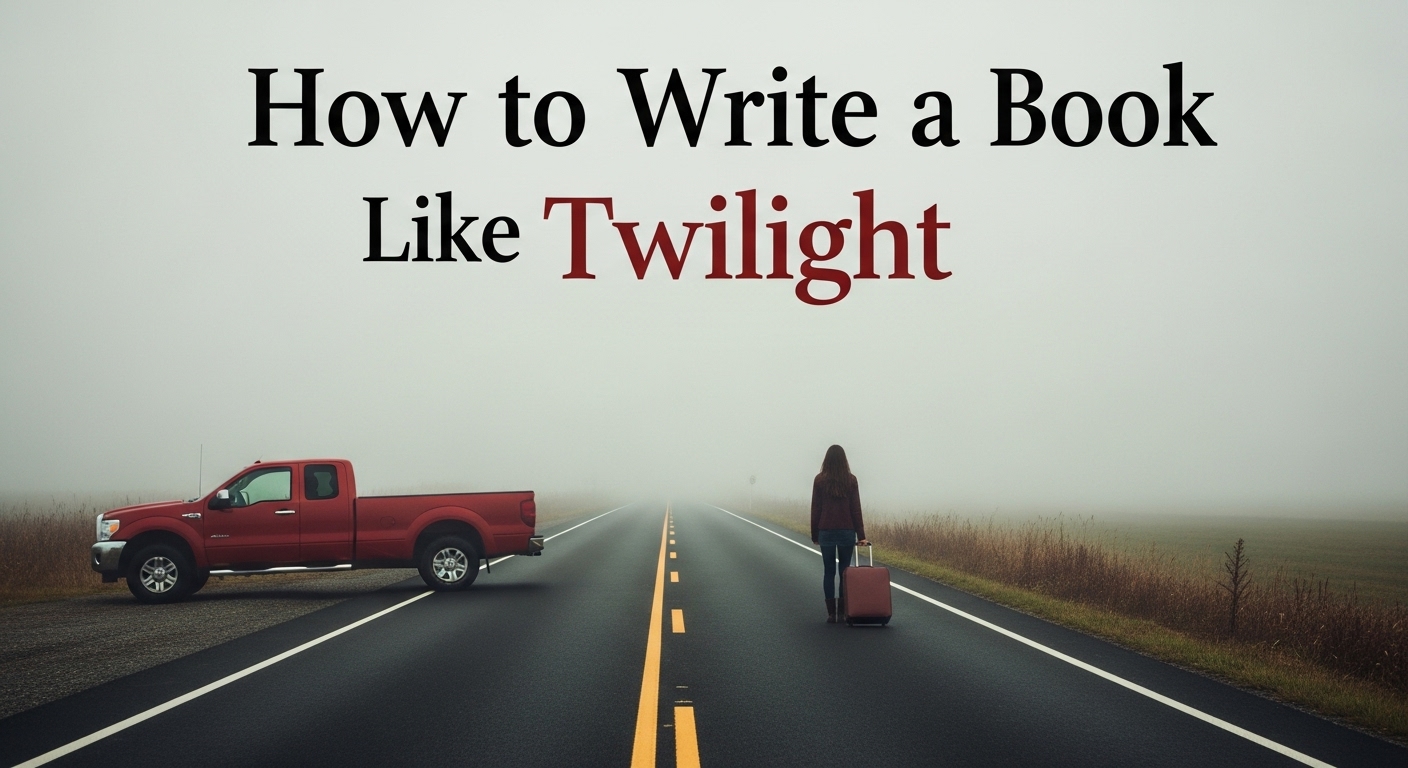
Forks, Washington in Twilight is both real and dreamlike. It’s always cloudy. It rains often. It’s soaked in green and fog. Even the mundane—school, parking lots, forest paths—feels like it’s on the edge of another world.
To create this kind of effect:
- Choose a setting that mirrors your characters’ emotional states. Is it lonely? Enclosed? Unpredictable?
- Layer your world slowly. Let it breathe through smells, sounds, and weather.
- Keep supernatural elements grounded—Twilight didn’t open with vampires jumping off rooftops. It began with an awkward school girl feeling like an outsider.
Worldbuilding in paranormal romance should be felt more than explained.
Use Intimacy and Restraint to Build Romantic Tension
One of the biggest draws of Twilight was the palpable romantic tension. Edward and Bella didn’t immediately fall into bed. There were boundaries—both emotional and physical—which made every brush of a hand feel electric.
Here’s how to replicate that slow-burn romance:
- Let your characters want each other but be afraid of the consequences.
- Use internal monologue to build longing—this is where first-person POV shines.
- Show restraint in physical scenes. Let anticipation linger. Small gestures should matter more than declarations.
- Avoid “perfect” partners. Give both love interests emotional baggage that makes their bond complicated.
Remember, desire in Twilight was laced with danger—and that’s what made it so intoxicating.
Write Emotion First, Then Plot
The plot of Twilight is fairly simple: girl meets mysterious boy, boy turns out to be a vampire, danger ensues. What elevated it was the emotional layering. Meyer spent more time developing conversations, glances, thoughts, and journal-like observations than on twisty plot turns.
To write in this style:
- Focus on character reactions more than external events.
- Let emotional development be the engine of your story.
- Use dialogue that reads like a dance—not exposition, but connection.
- Insert emotional shifts often. Even in quiet scenes, your characters should be changing.
If you do this right, your readers will be glued to the page even when “nothing” is happening.
Create Conflict That is Internal As Well As External
Yes, there were vampires hunting Bella. But the real conflict in Twilight was Edward’s internal war between his nature and his love for Bella—and Bella’s internal desire to belong in his world.
So, don’t rely on action sequences or external villains alone. Ask:
- What part of your protagonist’s identity is at war?
- What does the love interest fear about themselves?
- How does love threaten the life your character knows?
Layer your plot with tension that comes from within—those are the stakes that matter most to readers.
Give Your Supernatural Element a Personal Twist
Stephanie Meyer reimagined vampires. No coffins, no garlic—just dazzling beauty, a secret society, and moral complexity. That uniqueness helped her world stand out.
Here’s how you can add a twist of your own:
- Choose a supernatural element (ghosts, witches, fae, shapeshifters).
- Ask: “What hasn’t been done with this before?”
- Create a rule, vulnerability, or origin story that sets your version apart.
- Tie the supernatural to character arcs—not just spectacle.
Make your fantasy element feel like an extension of the characters’ struggles.
Use Language That’s Accessible Yet Evocative
Twilight’s prose was straightforward but moody. It wasn’t poetic or overly complex, but it captured atmosphere and emotion effectively.
To do the same:
- Use clean, intimate language with moments of lyrical flair.
- Avoid trying to sound “literary” unless it serves the scene.
- Use repetition and rhythm to evoke mood.
- Let imagery bloom in key moments (dreams, danger, kisses, loss).
The goal is for readers to feel like they’re in the main character’s mind, living every second alongside them.
Be Unapologetically Earnest
Critics often mocked Twilight for being melodramatic or overwrought—but that’s part of its appeal. It didn’t flinch from emotional intensity. It wore its heart on its sleeve.
Don’t hold back.
- Let your characters say the wrong things out of love or fear.
- Let your narrative be emotional, messy, and bold.
- Don’t try to be ironic or detached—lean in to sincerity.
This is what creates devoted fans. Twilight didn’t try to be “cool”—it tried to be true to its characters’ hearts.
Refine the Story Through Honest Editing
Once your draft is complete, you’ll need to revise for rhythm, clarity, and emotional consistency.
During editing, focus on:
- Pacing: Cut scenes that slow emotional momentum.
- Continuity: Make sure supernatural rules stay consistent.
- Dialogue polish: Ensure each character sounds distinct and real.
- Emotional depth: Ask yourself what each scene feels like.
This is also the stage where working with Professional editors or manuscript consultants can help sharpen your work. They’ll help identify plot holes, tone inconsistencies, or structural imbalances without diluting your unique voice.
You can also consider critique partners, beta readers (especially YA fans), or developmental editors. Use feedback to strengthen your vision, not to tame it.
Prepare for Publishing: Choose the Path That Matches Your Vision
Once your book is edited and complete, you’ll face the publishing question: traditional or self-publishing?
Traditional publishing gives your book access to wider distribution, professional marketing, and editorial support—but it can be competitive and slow.
Self-publishing gives you complete control and faster timelines—but you’ll need to handle or outsource editing, cover design, formatting, and promotion yourself.
Either route can work for a paranormal romance if you:
- Have a strong hook.
- Know your audience (typically YA or New Adult).
- Are ready to market on platforms like BookTok, Instagram, and Goodreads.
- Consider hiring help with query letters, cover art, or formatting services.
Publishing is not just about launching a book—it’s about launching your identity as a storyteller.
Final Thoughts: Write the Story You’re Scared to Write
Writing a book like Twilight isn’t about imitating vampires or teenage angst—it’s about writing something raw, vulnerable, and emotionally magnetic. It’s about daring to tell a story that feels personal and expansive at once. The supernatural world is just the stage. What matters is what’s at stake emotionally.
So write boldly. Write earnestly. Write with all the quiet fire of a love that could burn down the world—and maybe heal it, too.