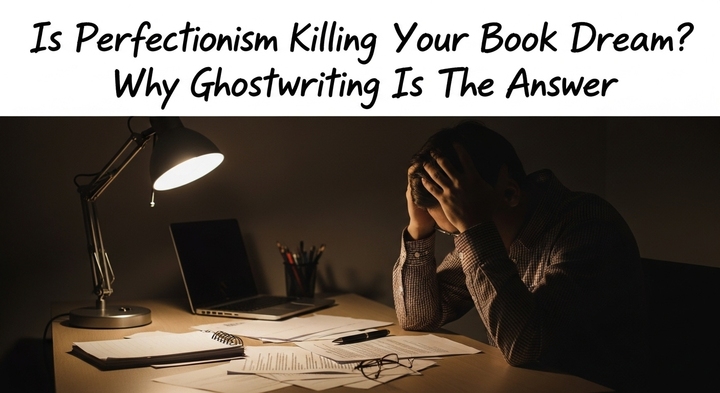
When Perfect Becomes the Enemy of Done
So many aspiring authors dream of writing a book—an unforgettable story, a transformative memoir, or a game-changing non-fiction guide. But often, that dream never leaves the page. Why? The most silent, stubborn obstacle is perfectionism. If you’re constantly rewriting your first chapter, editing every sentence before you finish a paragraph, or shelving your idea out of fear it won’t be “good enough,” then perfectionism may be quietly killing your book dream. The good news? You don’t have to face it alone. Ghostwriting could be the solution that finally unlocks your potential.
The Perfectionist’s Trap: A Creative Dream Turned Into a Creative Block
Perfectionism masquerades as ambition. At first, it seems noble: you want to produce your best work. But here’s the trap—it demands flawless execution before you even allow ideas to evolve. The outline must be perfect. The dialogue must sparkle. Every word must sound like a masterpiece.
Instead of helping, this constant self-editing turns into:
- Endless revisions
- Writer’s block
- Creative burnout
- Incomplete manuscripts
- Abandoned ideas
Ironically, your passion for excellence can prevent you from completing your project altogether.
Signs That Perfectionism Is Sabotaging Your Writing
You may not even realize perfectionism is to blame. Here are some warning signs:
- You rewrite one paragraph 15 times before moving to the next.
- You don’t allow rough drafts—every sentence has to shine immediately.
- You fear feedback, even constructive, because it threatens your fragile vision.
- You keep researching, planning, and brainstorming but never writing.
- You compare your first draft to published authors’ final products and feel defeated.
If any of these sound familiar, your perfectionism isn’t raising the bar—it’s locking the door.
The Mental Weight: Perfectionism Is Exhausting
Writing is a mental marathon, and perfectionism makes you carry extra baggage every mile. The pressure to perform kills spontaneity. You second-guess your ideas, doubt your skills, and feel ashamed for “not being good enough.” Many brilliant people with powerful stories get stuck in this emotional spiral.
That pressure can turn writing—something that should be expressive, fun, and fulfilling—into a self-imposed prison.
Ghostwriting: The Lifeline for the Perfectionist Writer
Now, enter ghostwriting—not as a cheat, but as a creative partnership. A ghostwriter helps you bring your vision to life without the paralyzing inner critic getting in the way. You stay the author, the visionary, the soul behind the story. The ghostwriter is the skilled technician who helps shape and refine your message.
Here’s why ghostwriting is the antidote to perfectionism:
Collaboration Over Isolation: Two Heads Are Better Than One
When you work with a ghostwriter, you’re no longer alone with your expectations. You have someone to bounce ideas off, guide you when you’re unsure, and give structure to your thoughts. This partnership is powerful—your creativity stays alive because it’s shared, not hoarded.
Progress Without Paralysis
A ghostwriter helps you move forward. They write drafts, revise as needed, and keep the project on track. You don’t have to obsess over every comma or word choice. You can finally see momentum. That “maybe someday” dream starts looking like a real book.
Perfection Refined—Not Feared
Ghostwriters know how to shape and polish ideas without sacrificing your voice. Instead of letting perfectionism stall the project, they refine your vision with professional clarity. You’ll still end up with a high-quality result—just without the agony of endless rewrites.
Preserving Your Voice While Easing the Pressure
One of the biggest fears of working with a ghostwriter is losing your unique voice. But a good ghostwriter listens—closely. They learn your tone, your expressions, your storytelling rhythm. Their job isn’t to replace your voice—it’s to echo it so you can be heard with clarity and strength.
You stay the author. They help make your message shine.
Letting Go of Control Without Letting Go of the Dream
Many perfectionists resist ghostwriting because it feels like giving up control. But actually, you’re making a smart trade—you give up the stress of getting every sentence perfect, and you gain the confidence of knowing your story is still authentically yours, just with expert support.
This mindset shift can be incredibly liberating. You can focus on your ideas while your collaborator handles the execution.
When Ghostwriting Makes the Most Sense
Ghostwriting can be a great fit if:
- You’ve been stuck for months (or years) with an unfinished manuscript
- You’re great at talking about your ideas but freeze when writing them
- You’ve started a book and lost steam halfway through
- You want to publish but don’t have time for all the steps
- You want your legacy, business expertise, or life story told—with care and clarity
Whether it’s fiction, non-fiction, memoir, or a guidebook, ghostwriting adapts to your goal.
Editing, Proofreading, and Publishing: The Full Picture
Once the ghostwriting is complete, perfectionists can take comfort in knowing the next steps will also be handled with precision. Ghostwriting is often paired with:
- Professional editing to sharpen content
- Proofreading to ensure error-free writing
- Publishing support to guide layout, formatting, and distribution
You no longer have to juggle every role. Instead, you become the creative director of your own book project.
Real Results Over Endless Revisions
Instead of chasing a perfect draft that never feels finished, ghostwriting gives you tangible results. A completed manuscript. A story you’re proud of. A message finally shared. And perhaps most importantly, peace of mind.
No more guilt, shame, or internal criticism—just a finished product that reflects your intent.
Perfectionism Isn’t the Problem—Inaction Is
Wanting your book to be great isn’t the issue. The real danger is letting that desire stop you from ever writing it. Perfectionism promises excellence but often delivers nothing. Ghostwriting bridges that gap. It allows your story to emerge, grow, and shine—without the endless delays.
What matters most is not how flawlessly your first draft reads—but whether your book ever reaches the world at all.
Final Thoughts:
Your book doesn’t need to be perfect. It just needs to be real, finished, and shared. Ghostwriting doesn’t diminish your voice—it amplifies it. It doesn’t steal your story—it helps it come to life.
So if perfectionism has been sitting in the driver’s seat for too long, it’s time to let go of the wheel. Whether you write it yourself or partner with a professional, your story deserves to be written, not just imagined.
FAQs
Q1: What is ghostwriting in book publishing?
Ghostwriting is when a professional writer helps you write your book while you remain the credited author.
Q2: Can a ghostwriter capture my unique voice and ideas?
Yes, skilled ghostwriters tailor the writing to match your tone, story, and intent.
Q3: Is using a ghostwriter considered cheating?
No, it’s a collaborative process where your vision is supported and brought to life professionally.
Q4: How does ghostwriting help with perfectionism?
It removes the pressure to write perfectly by giving you expert support in drafting and refining your book.
Q5: Will I still have creative control if I hire a ghostwriter?
Absolutely—you stay in charge of the content, direction, and message of your book.