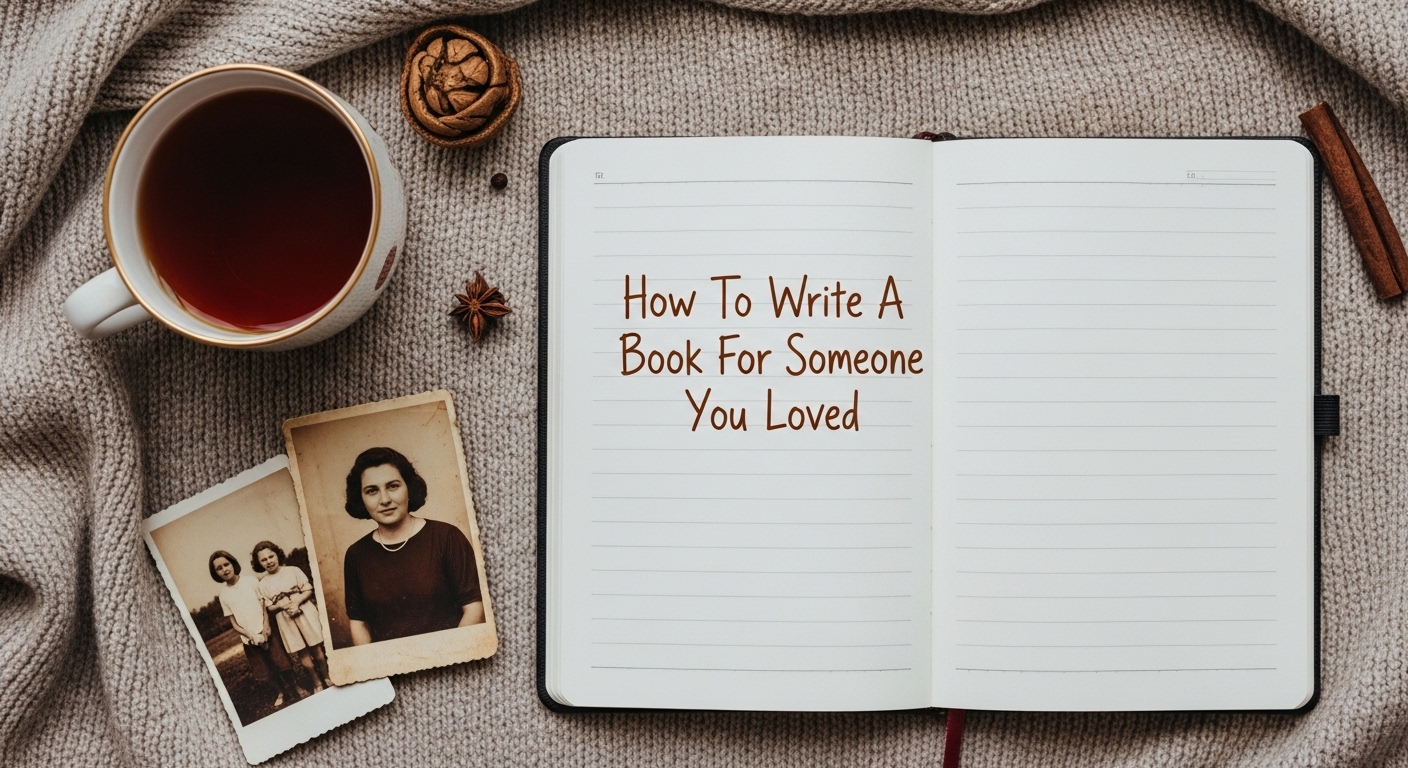
Writing a book for someone you loved—whether they’re still with you or have passed on—is a powerful act of memory, healing, and storytelling. It’s not just about putting words on a page; it’s about honoring a life, preserving a bond, and expressing feelings that may have never been said aloud. This type of book can take many forms: a memoir, a novel inspired by your loved one, a biography, or even a collection of letters, poems, or reflections. Whatever shape it takes, the process is intimate and emotional. This guide offers a step-by-step, human-centered approach to help you navigate the creative, emotional, and technical aspects of writing a book for someone you loved.-
Understand Your Purpose
Before you begin writing, clarify why you want to write this book. Ask yourself:
- Is it to remember a loved one who passed away?
- To express gratitude or preserve memories?
- To share your story of love and loss with others who may relate?
- To give a voice to someone who didn’t have one?
- To pass down a legacy to family or future generations?
Your purpose will act as your emotional compass throughout the process, grounding you when it gets overwhelming and guiding your choices about structure, content, and tone.
Choose the Right Format
Depending on your purpose and what you want to share, the book can take various forms:
Memoir or Personal Narrative
Tell your story and how your loved one impacted your life. This is ideal for expressing your personal journey and reflecting on growth, change, and love.
Biography
If the book is primarily about the other person’s life, a biography-style format might suit better. Research, interviews, and timelines may become part of your process.
Fiction Inspired by Real Events
Sometimes it’s too raw or personal to tell the story as it happened. Writing a novel inspired by your relationship allows emotional truth without literal retelling.
Poetry or Letter Collection
This is a creative way to express feelings, especially if you’re drawn to lyrical writing. Letters, poems, or journal entries can be compiled into a book that flows with emotion.
Gather Memories and Material
Memory can be elusive, especially when writing about someone you loved deeply. Collect everything that connects you to them:
- Photos – A single image can spark a flood of emotions and stories.
- Letters, emails, or texts – Personal communication can provide powerful material.
- Journals or voice memos – If you kept a journal or voice recordings, revisit them for honest reflections.
- Interviews – Talk to friends or family who also knew your loved one. Their stories can add depth and perspective.
- Mementos – Items like gifts, clothes, or souvenirs can trigger memories you forgot you had.
Organize this material chronologically, thematically, or emotionally—whichever feels most natural to you.
Outline the Story
Having an outline provides a sense of control in what can be an emotionally chaotic process. Try using one of the following outline formats:
Chronological
Start from when you met or were born, and move through key life events.
Thematic
Group chapters around shared experiences or values, like “Adventures,” “Grief,” “Laughter,” or “Lessons Learned.”
Emotional Arc
Follow your emotional journey—falling in love, facing loss, finding closure, and healing.
Keep your outline flexible. As you write, new insights or memories may reshape the direction of the book.
Start Writing With Honesty
Now comes the heart of it all—putting pen to paper. Begin by writing freely without editing. Let your emotions guide you. Here are a few tips for maintaining momentum:
- Set small, achievable goals. Write 500 words a day or one memory per session.
- Don’t worry about grammar or perfection. You can revise later.
- Be honest. The truth—raw, messy, beautiful—will connect most with readers.
- Use sensory detail. Describe how your loved one smelled, the texture of their hands, the sound of their laugh.
- Include conflict and flaws. Nobody is perfect, and acknowledging that adds authenticity.
It’s okay to cry. It’s okay to take breaks. This is an act of love, not a race.
Consider Including Personal Elements
To make the book more intimate and meaningful, think about integrating:
- Quotes from your loved one – Things they always said or believed in.
- Photos – Include images, if you’re planning to print.
- Recipes, music, or traditions – These details tell your unique story.
- Letters or unsent messages – Add an emotional layer to your narrative.
These elements can make your book not just a tribute, but a time capsule.
Edit with Compassion
Once your first draft is complete, take time away from it before editing. When you return:
- Read it as a reader. Does it make sense? Is it emotionally coherent?
- Look for clarity and flow. Does each chapter connect naturally?
- Tighten your language. Remove repetitive sentences, fix grammatical issues, and polish descriptions.
- Maintain the emotional tone. Don’t over-edit to the point you lose authenticity.
If the editing process feels overwhelming, consider working with a professional editor who has experience with memoirs or emotional storytelling. They can offer objectivity while preserving your voice.
Seek Feedback
Ask one or two trusted people to read your manuscript. Ideally, they should:
- Be emotionally intelligent.
- Understand your intention.
- Offer constructive feedback.
- Point out gaps or confusing parts.
You’re not looking for perfection, just clarity and emotional resonance.
Decide How to Publish
Publishing your book is the final step in turning it into a lasting tribute. You can:
Self-Publish
Platforms allow you to publish print or digital copies on demand. This is ideal if you want creative control and don’t mind managing layout, cover design, and promotion. You can hire book designers and typesetters to help bring your vision to life.
Work With Independent Publishers
Some publishers specialize in personal or legacy stories. They may offer ghostwriting, editing, and design services, often with a collaborative process.
Limited Print for Family
If the book is only for close friends or family, consider printing a limited edition with a print-on-demand service. You can work with a publishing consultant or editorial service to finalize your layout and cover design.
Whichever route you choose, your book will become a tangible tribute to your loved one’s life and your shared journey.
Final Touches: Design and Presentation
The final design of your book matters, especially if you plan to give it as a gift or keep it as a family legacy.
- Book cover design – Work with a professional to capture the tone and emotion.
- Interior layout – Ensure the text is clean, readable, and well-organized.
- Typography and font choices – Subtle changes in fonts can greatly affect readability and emotion.
- Dedication page – Include a heartfelt dedication, even if it’s just one line.
Don’t rush this stage. The presentation is a visual reflection of the care you’ve put into the story.
Conclusion
Writing a book for someone you loved is not just a literary task—it’s a journey through memory, grief, gratitude, and expression. Whether you’re honoring a lost loved one or capturing a living bond, this book becomes more than pages—it becomes a part of your legacy. Allow the process to change you, to move you, and to connect you to something deeper. The love you’ve felt is real, and when poured into words, it can live on long after the final page.
FAQs:
- Can I write a book for someone who has passed away?
Yes, many people write books to honor and remember loved ones who have died. It can be a deeply healing and meaningful process. - Do I need to be a professional writer to do this?
Not at all. What matters most is honesty, emotion, and intention. You can always hire an editor or writing service to help polish your work. - What if I get too emotional while writing?
That’s completely normal. Take breaks when needed and be gentle with yourself. Writing about someone you loved is often emotional. - Should I include personal photos or letters?
Yes, if you feel comfortable. Including personal materials can add authenticity and make the book more touching and unique. - How can I publish the book just for family and friends?
You can use self-publishing platforms or hire a small-scale printing service to create limited copies for private sharing.