Cooking videos are everywhere—YouTube, Instagram Reels, TikTok, Facebook, and every corner of the internet where food lovers gather. But here’s the real secret behind the most engaging and shareable cooking content: a well-crafted video script.
Sure, a beautifully arranged kitchen, the sizzle of ingredients, and mouthwatering visuals grab attention. But without a strong cooking video script, even the most delicious dishes can feel disorganized or hard to follow. That’s why knowing how to write a video script for corporate video or any professional video can also help you structure your content for clarity, timing, and audience engagement. The principles of pacing, natural dialogue, and storytelling work across niches—whether you’re teaching a recipe or presenting a company story.
If you’ve ever hit record, started cooking, and halfway through realized you forgot an ingredient—or completely lost track of what to say—you already understand why scripting matters. A well-written script keeps your cooking video organized, conversational, and easy for viewers to follow, while making the experience entertaining and memorable.
Today, we’ll break down how to write a script for a cooking video step by step, with practical tips, storytelling techniques, and SEO-friendly strategies. You’ll learn how to structure your shots, write engaging voiceovers, and keep your audience hooked—whether your goal is a fun recipe tutorial or a polished corporate video. Think of it as writing your blueprint before the camera rolls, so every ingredient, every tip, and every line lands perfectly.
Why You Need a Script for a Cooking Video
Think of your script as your recipe for the video itself. Just like you wouldn’t start baking without knowing the ingredients, you shouldn’t start filming without knowing your structure.
A cooking video script helps you:
- Stay organized
- Keep your pacing natural
- Highlight key cooking techniques
- Reduce mistakes and retakes
- Ensure your instructions are clear
- Connect with your audience through storytelling
And most importantly? It helps your viewers feel confident enough to try the recipe themselves.
How to Write a Script for a Cooking Video (Step-by-Step)
Here’s the fun part. Let’s break it down.
1. Start by Defining Your Video Style
Before writing anything, decide what kind of cooking video you want to create. Your script will change depending on your style.
Here are popular formats:
Hands-and-Pans Style
The camera focuses on ingredients and hands only.
Your script will lean heavily on voiceover narration and step-by-step instructions.
On-Camera Cooking Show
You speak directly to the camera, like a mini cooking show.
Your script should include dialogue, transitions, and audience engagement moments.
Short-Form Cooking Reel
Quick, visually driven, fast-paced.
Script should be crisp, concise, and time-efficient.
Story-Driven Cooking Video
You share personal stories, cultural background, or fun facts while cooking.
Your script will revolve around food storytelling and emotional engagement.
Deciding the style helps shape the entire script.
2. Outline Your Video Structure
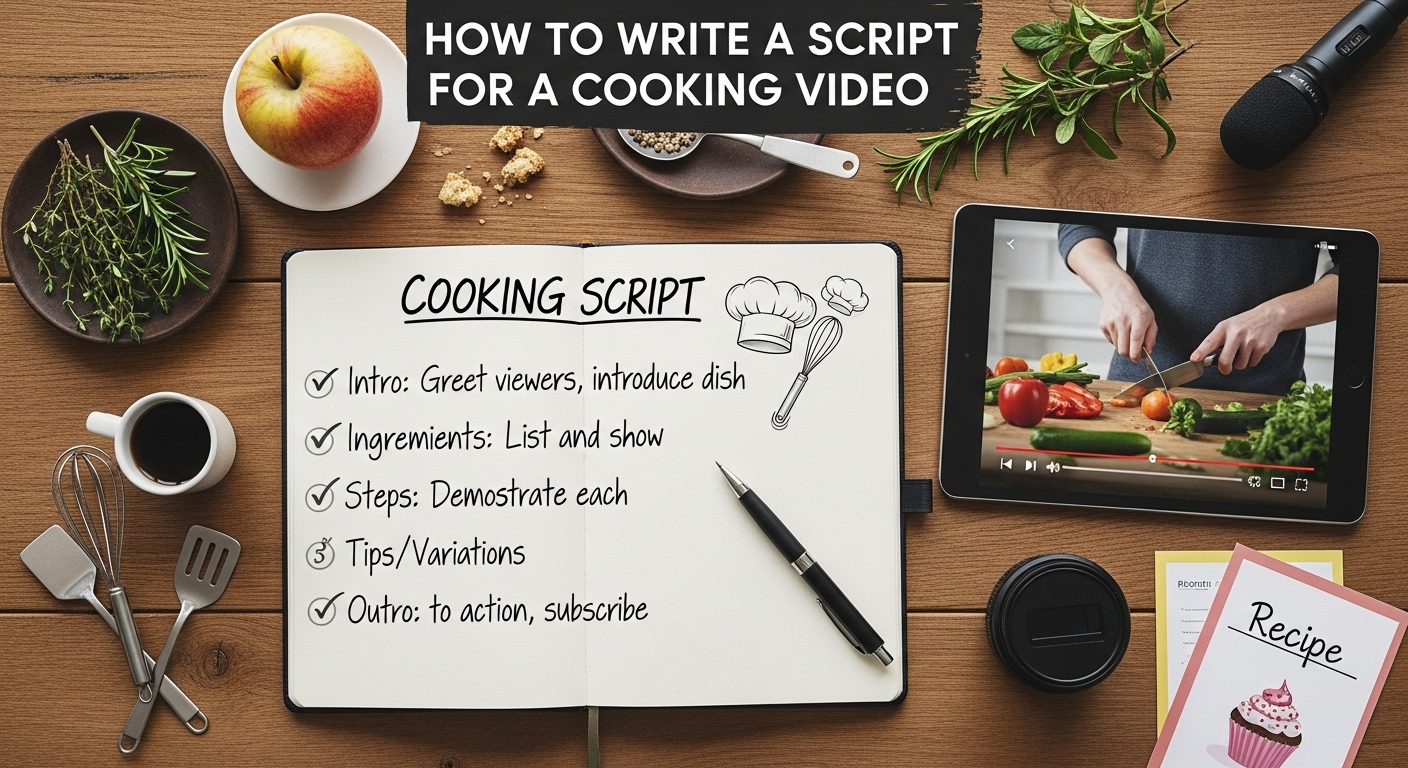
Every good cooking video script follows a simple skeleton. Here’s a friendly example of a structure you can use:
Basic Script Structure for a Cooking Video
| Section | Purpose |
| Introduction | Welcome viewers, introduce the dish, and set the tone. |
| Ingredients List | Share or display ingredients clearly. |
| Step-by-Step Instructions | Break down the cooking process. |
| Cooking Demonstration | Add tips, techniques, and kitchen hacks. |
| Plating & Presentation | Show the final dish beautifully. |
| Closing Call-to-Action | Encourage engagement: subscribe, like, comment, or try the recipe. |
3. Write a Fun, Engaging Introduction
Your intro is where viewers decide whether to keep watching. So be warm, friendly, and inviting.
Here’s a conversational example:
“Hey everyone! Today we’re making the creamiest garlic butter pasta you’ve ever had—seriously, it’s dangerously addictive. If you need a quick dinner that tastes like heaven but takes 15 minutes, you’re going to love this.”
See? Simple, upbeat, and enticing.
Semantic keywords to include naturally:
- recipe introduction
- cooking video opener
- culinary inspiration
- food storytelling
Your intro sets the vibe—make it delicious.
4. Script Your Ingredient Section Clearly
This part needs to be organized and easy to follow. People often pause videos here, so clarity matters.
You can deliver ingredients in two ways:
Spoken Ingredients
“Here’s what you’ll need:
Two cups of cooked pasta, three cloves of garlic, a tablespoon of butter…”
On-Screen Ingredients
Text pops up while you introduce the recipe.
Pro Tip:
Keep your script concise—don’t over-explain. Save the details for the cooking steps.
5. Break Down Your Recipe into Step-by-Step Instructions
This is the heart of your script.
Here’s where you outline:
- What you’re doing
- Why you’re doing it
- How to do it correctly
And don’t forget: your viewer is cooking along, so clarity and pacing are everything.
Example Step-by-Step Script Excerpt:
“Heat your pan over medium heat. Once it’s warm, add your butter. Let it melt gently—don’t rush this step, because slow melting gives you that rich, nutty flavor we’re looking for.”
Friendly, clear, and educational.
Semantic keywords to include:
- step-by-step recipe
- cooking demonstration
- kitchen technique
- food preparation process
- cooking instructions
6. Add Storytelling and Personality
Cooking videos shine when you show personality. A script doesn’t mean sounding robotic—you want viewers to feel like you’re their foodie friend.
Ways to add flavor:
Share a quick story:
“My grandma taught me this trick when I was 10…”
Add a fun fact:
“Did you know chilling cookie dough makes it taste so much better?”
Offer kitchen hacks:
“A splash of pasta water helps make the sauce silky.”
Cooking is personal—let your audience feel that.
7. Keep Your Language Simple and Friendly
Avoid complicated culinary jargon unless it’s necessary. Use conversational language, just like you’d talk to a friend in the kitchen.
Instead of:
“Emulsify the mixture until homogeneous.”
Try:
“Stir everything together until the sauce looks smooth.”
Your script should guide, not confuse.
8. Plan Your Visual Cues (Super Important!)
Great cooking videos rely heavily on visuals. Write down cues in your script so filming becomes effortless.
Example of adding visual cues to your script:
Narration: “Chop your onions into small pieces.”
Visual Cue: Close-up shot of chopping.
Narration: “The sauce should look creamy at this stage.”
Visual Cue: Zoom in on the sauce texture.
Semantic keywords for video cues:
- visual transitions
- food close-ups
- ingredient shots
- camera angles
9. Add Timing and Pacing Notes
Nothing loses viewers faster than a rushed or slow video. Your script should estimate how long each segment will take.
Here’s a helpful pacing table:
Cooking Video Timing Guide
| Section | Ideal Duration |
| Intro | 10–20 seconds |
| Ingredients | 15–30 seconds |
| Cooking steps | 1–3 minutes |
| Plating | 10–15 seconds |
| Final shots | 5–10 seconds |
| End message | 10–15 seconds |
Your pacing doesn’t have to be perfect, but having a plan makes editing so much easier.
10. Script Your Plating and Final Presentation
This is the “wow” moment.
Your script should include:
- A description of the final dish
- How to plate beautifully
- Good lighting or angles
- Tasting moment (optional)
Example:
“And that’s it! Look at this gorgeous bowl of pasta—creamy, glossy, and packed with garlic flavor. Honestly, this is comfort food at its finest.”
This is where you show off.
11. Close with a Strong, Friendly Call-to-Action
Your CTA should feel natural—not salesy.
Here are examples that feel conversational:
- “If you try this recipe, let me know in the comments—I’d love to see your creations!”
- “Hit subscribe for more easy recipes every week!”
- “Drop if you love pasta as much as I do.”
You want people to engage, not scroll past.
12. Read Your Script Aloud (Your Best Editing Tool)
Your script should flow like a real conversation. Reading aloud helps you:
- Remove awkward phrasing
- Fix pacing issues
- Make tone more natural
- Catch unclear instructions
If you stumble while reading, your viewers will stumble while watching—simple as that.
Final Script Example (Mini Version)
Here’s a short demonstration of how your script might look:
INTRO:
“Hey friends! Today we’re making a cozy, creamy garlic butter pasta that comes together in just 15 minutes. Trust me, this one is a keeper.”
INGREDIENTS:
“Here’s what you’ll need: pasta, butter, garlic, cream, salt, pepper, and a little Parmesan.”
STEP 1:
“Start by melting your butter on medium heat. Don’t rush it—slow melting makes the flavor richer.”
STEP 2:
“Add your garlic and cook until fragrant. If your kitchen smells incredible right now, you’re doing it right.”
STEP 3:
“Pour in your cream and stir until the sauce looks silky and smooth.”
PLATING:
“And now, twirl your pasta into a bowl, drizzle a little extra sauce, add Parmesan, and enjoy!”
CTA:
“If you make this dish, tag me—I LOVE seeing your food!”
Conclusion
There you have it—your complete guide on how to write a script for a cooking video. The key is to keep your script friendly, clear, organized, and full of personality. Remember, your viewers aren’t just watching you cook—they’re connecting with you.
Whether you’re filming short, snappy reels or long, cozy cooking tutorials, a good script is your secret ingredient for success. So grab a notebook, start planning, and get ready to create cooking videos that are deliciously binge-worthy.