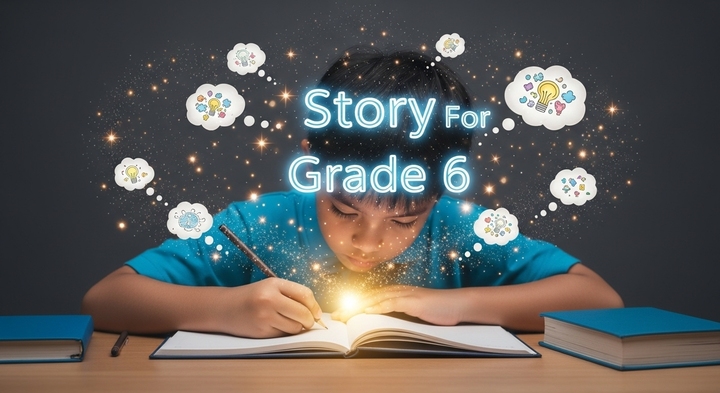
Writing a story in Grade 6 is not just an academic task—it’s your chance to create new worlds, exciting adventures, and interesting characters that leap off the page. Whether you’re writing for an assignment or just for fun, this guide will help you develop your ideas, organize your thoughts, write confidently, and refine your work like a young author. Let’s dive deep into how you can master the art of storytelling.
Imagine First: Let the Ideas Flow
Great stories begin with great ideas. Before you write a single sentence, sit back and let your imagination wander.
- What if a dog could talk and solved mysteries?
- What happens when a school van enters a time portal?
- How would you survive on a deserted island with no food but a box of crayons?
Don’t stop yourself from dreaming big. Your first step is to write down all the wild, fun, silly, or serious ideas that pop into your mind. You can use a mind map, a story journal, or simply list ideas in a notebook.
If you feel stuck, try this technique:
👉 “What if” starter – Begin a question with “What if…” and fill in something strange, magical, or surprising.
Shape Your Story: Characters, Setting & Conflict
Once you have your idea, it’s time to shape it into a story. Think of three things: characters, setting, and conflict.
Characters
Characters are the people, animals, or creatures in your story. You should:
- Give them names.
- Decide what they like or don’t like.
- Choose what they want (their goal).
Example:
Aarav, a curious 11-year-old boy, wants to find the hidden treasure buried in his village forest.
Setting
Where and when does the story take place? Describe the surroundings using all five senses.
Example:
“The forest was damp and cool, with the smell of rain-soaked earth. The only sound was the creaking of old trees swaying in the wind.”
Conflict
Conflict is the problem that makes your story interesting. Without it, your story may feel boring.
Examples of conflict:
- A mystery that needs solving.
- A bully that must be stood up to.
- A storm that traps the main character inside a cave.
Conflict drives the plot and helps your character grow.
Structure Your Plot in Four Simple Stages
Every good story needs structure. For Grade 6 students, keeping it simple and clear works best. Here’s a four-part plan you can use:
- Beginning – Introduce the character, setting, and hint at the problem.
- Build-Up – Something goes wrong or changes. Tension starts to rise.
- Climax – The most exciting or scary moment. The big challenge appears!
- Resolution – The conflict is resolved, and the character learns something.
Try summarizing your story in one sentence before writing:
“Ali enters a spelling bee, forgets a word, and must overcome his fear to win.”
Start Writing: Scene by Scene
You’ve got your idea and structure—now it’s time to write! Don’t worry about getting it perfect in the first go. Just get your thoughts on paper.
A Few Writing Tips:
- Start with action or dialogue to grab attention.
- Use short paragraphs to keep it readable.
- Include how your character feels—not just what they do.
- Use powerful verbs and exciting adjectives.
Example opening:
Ali’s heart pounded as he stepped onto the stage. The spotlight blinded him, and the microphone felt like a snake slithering in his hand.
As you continue writing, move through the build-up, climax, and resolution. Take your reader on a journey!
Dialogue and Emotion Make Stories Alive
Want to make your story more exciting? Use dialogue and emotion.
Dialogue
When characters talk, it feels more real. Always use quotation marks.
Example:
“I can’t believe we’re really doing this,” Meera whispered.
“Shh! They’ll hear us,” Rani replied.
Emotion
Let the reader feel what the character feels—fear, joy, confusion, anger.
Example:
Rani’s knees trembled as the door creaked open. She wanted to run, but her feet refused to move.
These little touches bring depth and meaning to your story.
Editing Your First Draft: Make It Shine
Once your story is written, don’t stop there. Writing is just half the job. Editing helps your story become clearer, cleaner, and stronger.
- Read it aloud – You’ll notice awkward sentences or missing words.
- Check spelling and punctuation – Make sure every sentence ends properly, and every word is spelled correctly.
- Look for repetition – Avoid using the same word too often.
- Fix unclear sentences – Ask yourself: “Can someone else understand this easily?”
Take a short break before editing. Fresh eyes help you catch mistakes you didn’t see before.
Proofreading: The Final Touch
After editing, go over your work one last time. This is called proofreading. It’s the stage where you polish your work like a diamond.
Proofreading checklist:
- Are names spelled the same throughout?
- Are quotation marks used correctly in dialogues?
- Are there any typos or small grammar mistakes?
- Are all the sentences complete?
Ask a teacher, parent, or grademate to read your story and give feedback too.
Publishing and Sharing Your Story
You’ve written, edited, and proofread. Now what?
Even young writers can publish their stories in creative ways:
- Graderoom wall display – Ask your teacher if your story can be shared with grademates.
- School newsletter – Some schools publish student work.
- Printed book – Create a cover, staple the pages, and turn it into a real book!
- Storytelling day – Read it aloud in front of your grade.
Publishing your story doesn’t have to mean printing a book. It simply means sharing it proudly with others.
Story Starters to Inspire You
If you need a little boost, try beginning your story with one of these lines:
- “The clock struck midnight, and the painting on the wall began to glow.”
- “No one believed Mia when she said the treehouse could fly.”
- “A note slipped out of my library book, and it changed everything.”
- “I followed the map until I reached the gate. It was locked, but the key was in my pocket.”
Creative Exercises to Boost Your Skills
Writing becomes easier when you practice regularly. Here are fun exercises to try:
- Rewrite a fairy tale with a twist.
- Draw your character and describe them in five sentences.
- Write a story in which you are the hero.
- Write one paragraph without using the letter “e.”
These exercises stretch your creativity and help improve vocabulary, grammar, and confidence.
Write Your Best Story Yet with Professional Support
Bring your Grade 6 story to life with expert guidance that helps you write, refine, and share your ideas with confidence. Whether you’re imagining magical lands, heroic adventures, or school day surprises, working with skilled editors, proofreaders, and publishing mentors can make your story shine. From shaping strong characters to polishing your grammar and structure, professional support turns your creative efforts into a well-crafted masterpiece. Let your imagination soar—and let the right help bring your story to its fullest potential.
Final Thoughts
Writing a story in Grade 6 is about expressing your imagination while learning how to shape ideas into something meaningful. From brainstorming to structuring, writing, editing, and publishing, each step brings you closer to becoming a confident young writer. The more you write, the better you get—so keep writing, keep dreaming, and let your stories take flight.
FAQs
Q1: What should I write a story about?
Anything you find exciting—friends, animals, magic, or school adventures.
Q2: How long should my story be?
It can be 1 to 2 pages long for Grade 6, depending on your teacher’s instructions.
Q3: Should I write in first or third person?
Either works! First person uses “I,” third person uses “he” or “she.”
Q4: Can I add pictures to my story?
Yes! Illustrations make your story even more fun to read.
Q5: What if I make mistakes while writing?
Mistakes are normal—editing and proofreading help you fix them later.