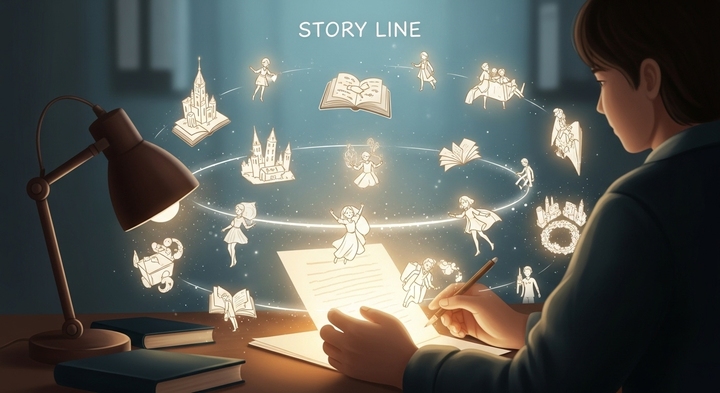
Picture a journey with no map. That’s what writing a book without a clear storyline feels like—wandering aimlessly, unsure where the road leads. Your storyline is the backbone of your narrative, the invisible thread that ties every scene, character, and theme together. Whether you’re writing your first book or your tenth, crafting a powerful storyline requires more than just ideas—it demands precision, emotional depth, and structure. Let’s reshape how storylines are built.
Start With the “Emotional Destination”
Forget outlines for a moment. Instead, ask yourself: How do I want readers to feel when they finish this book? Inspired? Heartbroken? Empowered?
This emotional destination helps define the tone and trajectory of your storyline. From this point, everything you build—characters, setting, dialogue—should echo this final emotional impact.
A compelling story isn’t just about what happens; it’s about why it matters emotionally. Make this your North Star.
Develop the “Trigger and Tension”
Every unforgettable book has a moment when the normal world changes—a trigger that sets everything in motion.
It could be something big (a death, a betrayal, a discovery), or small (a conversation, a lost letter), but this moment creates tension. Tension fuels the storyline. Without it, there’s no reason to turn the page.
Rather than dumping background info upfront, build your story through the tension. Let readers feel like they’re unraveling the mystery one thread at a time.
Use Character Arcs as Your Framework
Instead of structuring around events, structure around transformation.
What does your protagonist believe at the start? And how will those beliefs be tested, broken, or proven wrong?
This shift from focusing on plot points to personal change is key. A weak storyline moves from place to place. A strong one moves from heart to heart.
Build scenes that force your character to evolve, not just survive.
Think In Moments, Not Chapters
A common mistake? Thinking chronologically. Don’t just write what happens next—write the defining moments.
These include:
- A decision your character regrets
- A confrontation that changes dynamics
- A secret revealed that shifts the narrative
- A victory that feels hollow
- A loss that brings clarity
Design your storyline around these pivotal moments, then connect them with action or reflection. This creates emotional spikes that make your story unforgettable.
Let the Subplots Reflect or Challenge the Core
Your storyline is never just a straight line. Layer it.
Include subplots that:
- Reflect your main character’s fear or flaw
- Offer alternative views of the main theme
- Add complexity through relationships or backstory
These subplots shouldn’t exist for filler—they should either support or interfere with your character’s growth. Done well, they give your book depth and rhythm, balancing action with introspection.
Shape the Middle With Reversals, Not Repetition
The middle of a book often drags because the storyline stalls. Avoid this by designing reversals.
A reversal is when something unexpected happens that changes the direction of the story. Not random twists—but natural consequences.
For example:
- A friend becomes a foe
- A solution makes things worse
- A success leads to moral compromise
Each reversal should raise stakes and force your character to make tougher decisions.
Create a Climax That Rewrites the Journey
The climax shouldn’t just resolve the plot—it should reframe it.
This is the moment when the character’s final transformation takes place. It often involves a sacrifice, a realization, or an irreversible action.
The events leading up to this moment should build pressure, hint at possible outcomes, and challenge every part of your character’s belief system. When you land the climax, it should feel both surprising and inevitable.
If your story ends exactly where readers predicted, something’s missing.
Resolve the Core Emotion, Not Every Thread
Not every question needs an answer. What matters most is emotional closure.
Ask:
- Has your character faced their inner flaw?
- Is the theme fulfilled or redefined?
- Are readers left with a lasting impression?
The final scene should echo your emotional destination from earlier. Whether open-ended or neatly wrapped, it should feel earned.
Editing services can be vital here. A professional editor can help ensure the ending resonates by identifying what’s unresolved or unclear, helping you polish the final emotional beats.
Editing: When the Storyline Is Too Big To See Clearly
You’ve written the story. You know every scene. But that closeness can make it hard to notice pacing issues, plot holes, or thematic contradictions.
That’s where developmental editing comes in.
This phase focuses on:
- Story structure
- Character development
- Pacing
- Thematic consistency
An experienced editor won’t just trim words—they’ll strengthen your storyline’s foundation. If your story feels slow or scattered, don’t rewrite blindly. Get feedback. It can transform your book from good to unforgettable.
Proofreading: Where the Storyline Shines Through Precision
After editing the big picture, it’s time for the small details.
Proofreading ensures:
- Scene transitions flow logically
- Tense and tone are consistent
- No grammatical errors distract from the narrative
- Dialogue supports character arcs
This stage is your story’s final polish. A proofreader won’t rewrite your storyline—but they’ll remove the surface noise so your plot and emotion speak clearly.
Think of it as fine-tuning a melody after composing the symphony.
Publishing: Shaping the Storyline for Readers
When you’re ready to publish, storyline still matters.
A publisher (traditional or independent) or a self-publishing service will often review your manuscript for:
- Market fit
- Genre alignment
- Story originality
- Reader engagement potential
Sometimes, this results in editorial feedback asking for storyline adjustments to improve sales appeal or clarity. Be open to suggestions—but protect the core of your story’s emotion.
Publishing also involves designing your book cover and writing the blurb—both of which should reflect your storyline’s tone and conflict. This is where packaging meets storytelling.
Common Storyline Pitfalls to Avoid
Even seasoned writers fall into these traps:
- Too much setup, not enough movement – Your story needs stakes early.
- Plot without purpose – Make sure each event ties to your theme or character arc.
- Characters that don’t evolve – Flat characters create flat stories.
- No emotional center – Action alone won’t make a story memorable.
Avoiding these requires reflection, not just revision. Step away from your draft, revisit your emotional destination, and revise with intention.
Final Thoughts: Storylines Are Sculpted, Not Born
No one sits down and writes a perfect storyline on the first try. It’s an evolving process of discovery, structure, and refinement.
Write freely at first. Let the raw emotion pour out. But once you have that material, begin shaping it into something deliberate—scene by scene, layer by layer.
And don’t be afraid to seek help. Editing, proofreading, and publishing services exist not because you failed—but because your story deserves to be told in its best form.
FAQs
Q1. How do I know if my storyline is strong enough?
If your character changes, the stakes escalate, and readers care about the outcome, you’re on the right track.
Q2. Should I outline before writing the storyline?
It depends. Some writers benefit from outlining; others discover the storyline as they write. Either way, you’ll eventually need a structured shape.
Q3. What if my story doesn’t fit a typical structure?
That’s okay—many great books break conventional structure. Just make sure your story still has emotional and narrative momentum.
Q4. Can editing fix a weak storyline?
A developmental editor can help restructure or strengthen a weak storyline, but they can’t replace your creative vision. Collaboration works best.
Q5. Do I need professional services before publishing?
While not mandatory, professional editing and proofreading significantly increase your book’s clarity, quality, and reader engagement.