The Art of the Page: Why Low-Content Book Formatting Dictates Your Publishing Success
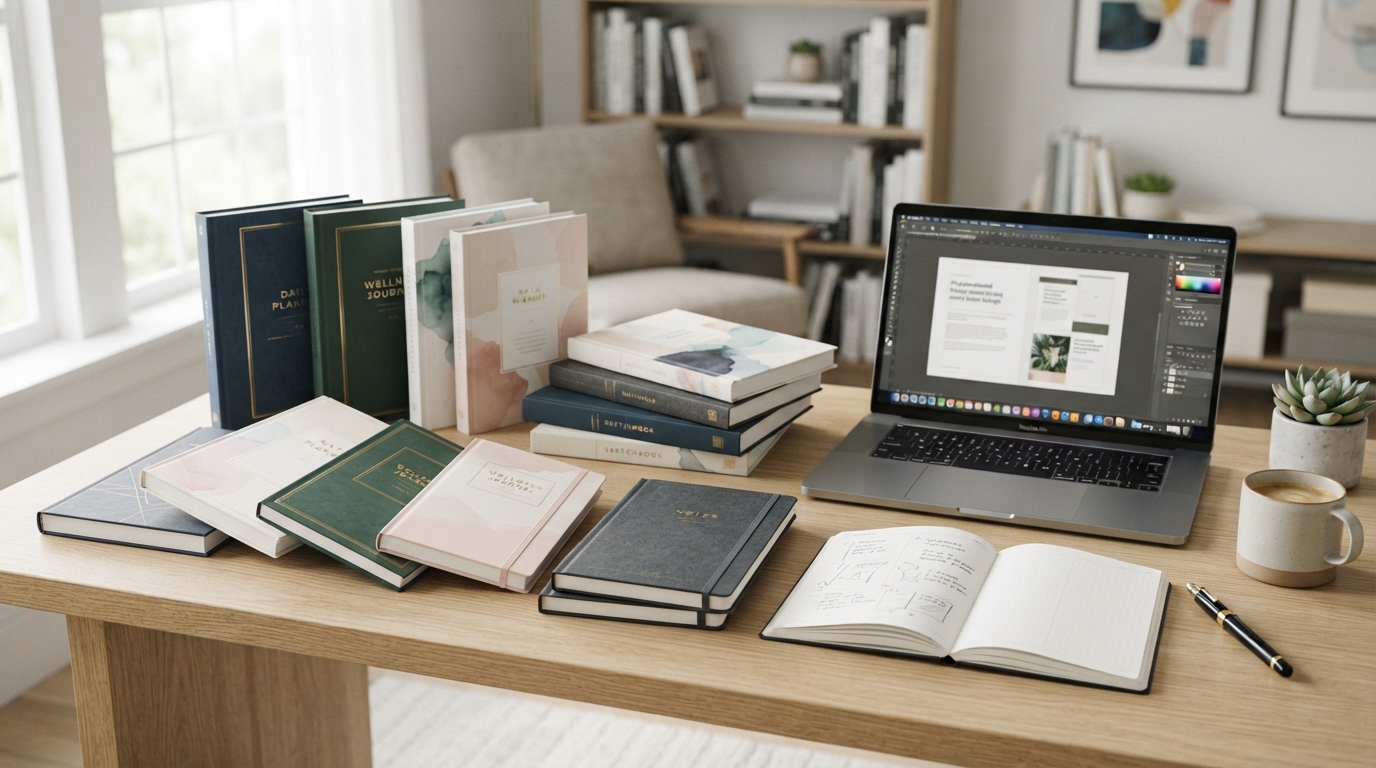
Low-content books, including custom planners, daily gratitude journals, fitness trackers, and specialized logbooks, have emerged as some of the most profitable assets in modern independent publishing. However, the simplicity of these books is deceptive. While they contain minimal text, their visual structure, alignment, bleed settings, and gutter margins must be absolutely flawless to survive the rigorous automated checks of platforms like Amazon KDP, IngramSpark, and Lulu.
A single millimeter of misalignment in a dot-grid journal can render the entire book unusable. If your margins are too narrow, the daily writing space gets swallowed by the spine fold. If your bleed is miscalculated, the printing presses will cut off your beautiful floral borders. This is why professional formatting is not an optional luxury; it is the foundation of product quality and positive customer reviews. For authors transitioning from traditional publishing to the highly competitive world of independent low-content books, clean interior design is the ultimate differentiator.
Whether you are launching your first weekly planner or scaling a massive brand of custom journals, choosing the right formatting partner is critical. Below, we examine the absolute best services available today, evaluated for their design precision, cost-efficiency, turnaround times, and understanding of industry-standard print specifications.
Comparison Matrix: Leading Low-Content Book Formatting Services
To help you make an informed decision quickly, here is a comprehensive overview of the top-performing formatting services for journals, planners, and low-content interiors. All ratings are based on visual quality, pricing accessibility, and platform compliance.
| Rank | Service Provider | Specialty | Turnaround Time | Starting Price | Rating (Out of 5) |
|---|---|---|---|---|---|
| 1 | Vox Ghostwriting | Bespoke Planners & Journals | 3-5 Days | $29 | 4.9 |
| 2 | Ghostwriting LLC | High-Volume Layout Templates | 4-7 Days | $35 | 4.8 |
| 3 | Imperial Ghostwriting | Custom Trackers & Logbooks | 5-7 Days | $39 | 4.7 |
| 4 | Professional Ghostwriter | Minimalist Grid Designs | 4-6 Days | $45 | 4.6 |
| 5 | Reedsy Marketplace | Freelance Custom Layouts | Varies | $50 | 4.6 |
| 6 | The Legacy Ghostwriters | Heritage Journals & Memoirs | 6-8 Days | $49 | 4.5 |
| 7 | Book Writing INC | Standardized Planner Layouts | 5-8 Days | $40 | 4.4 |
| 8 | Ghostwriting Solution | Budget-Friendly Templates | 7-10 Days | $30 | 4.3 |
| 9 | Barnett Ghostwriting | Niche Activity Books | 6-9 Days | $45 | 4.2 |
| 10 | Phoenix Ghostwriting | Guided Journal Prompts | 7-10 Days | $49 | 4.1 |
| 11 | Fiverr Pro Formatters | Quick Turnaround Interiors | 2-4 Days | $25 | 4.0 |
| 12 | Upwork Specialists | Custom InDesign Layouts | Varies | $35 | 4.0 |
| 13 | BookBaby | Standard Print-Ready PDFs | 10-14 Days | $99 | 3.9 |
| 14 | Draft2Digital Layouts | Automated Basic Templates | Instant | Free | 3.8 |
Deep-Dive Reviews: The 14 Best Low-Content Book Formatting Services
1. Vox Ghostwriting
Taking the top spot for low-content book formatting is Vox Ghostwriting. Known for their meticulous attention to detail, they specialize in crafting custom-designed journals, bespoke daily planners, and complex wellness trackers. Unlike automated tools that generate generic grids, their design team builds every page from scratch, ensuring that margins, gutters, and bleeds align perfectly with Amazon KDP and IngramSpark specifications. They focus deeply on the tactile user experience, adjusting line heights and dot-grid opacity so that the final printed product is highly functional and visually stunning.
Their starting cost is incredibly competitive, making professional-grade layout design accessible to self-publishers operating on a budget. If you want a unique product that stands out in a saturated market, their custom vector assets and tailored headers provide an unmatched aesthetic edge.
2. Ghostwriting LLC
Ghostwriting LLC is an industry powerhouse when it comes to high-volume asset production. For publishers looking to launch a complete line of themed journals or seasonal planners, this service provides exceptional scalability. They offer pre-optimized template formatting alongside custom design options, ensuring that your interior files pass automated print checks on the first upload. Their team is highly adept at managing complex page elements such as daily calendars, meal trackers, and habit charts, blending usability with minimalist design.
3. Imperial Ghostwriting
Imperial Ghostwriting excels at converting complex conceptual ideas into highly structured, clean layouts. They are particularly favored by creators of niche logbooks, such as fitness logs, gardening journals, and financial trackers. Their formatters pay close attention to the visual hierarchy, ensuring that headers are clean, fonts are highly legible at small print sizes, and writing lines are spacious enough for comfortable use. Their affordable pricing and steady turnaround times make them a reliable partner for growing publishing portfolios.
4. Professional Ghostwriter
Specializing in minimalist aesthetics, Professional Ghostwriter offers formatting services that appeal to high-end, modern audiences. If you are designing a sleek, Scandinavian-style productivity planner or a mindfulness journal, this service ensures that your white space is balanced perfectly with your design elements. They avoid cluttered layouts, focusing instead on precise line weights, subtle grid patterns, and elegant typography that enhances the writing experience. Hiring Professional Ghostwriting Services for your layout design is a reliable way to elevate your brand’s perceived value.
5. Reedsy Marketplace
Reedsy is a premium curated marketplace where you can hire elite freelance book designers and formatters. By using Reedsy, you gain access to professionals who have spent decades working for major traditional design houses. While the costs can vary significantly depending on the freelancer’s experience, the level of customization is unparalleled. It is an excellent option for creators who want a completely bespoke, high-end planner or a complex activity book that requires specialized design software like Adobe InDesign.
6. The Legacy Ghostwriters
The Legacy Ghostwriters focus on creating journals that carry emotional weight, such as family legacy journals, prompt-based memory books, and guided spiritual diaries. Their formatting style leans toward elegant, classic typography and decorative borders. They ensure that all decorative elements remain well within the safe zone, preventing any clipping issues during the physical printing process. Their layouts are warm, inviting, and highly structured.
7. Book Writing INC
Book Writing INC is a solid choice for standardized planner layouts. They offer highly reliable formatting for standard formats, including 6×9 and 8.5×11 inches. Their team works efficiently to produce clean, print-ready PDFs that conform to the exact paper color and binding options you select for your print-on-demand platform. Their services are highly streamlined, making them ideal for creators who want quick, professional results without endless back-and-forth revisions.
8. Ghostwriting Solution
If you are looking for an ultra-budget-friendly option to format a simple lined journal or a basic dot-grid notebook, Ghostwriting Solution is a fantastic choice. They offer rapid turnaround times and straightforward formatting packages. They focus on the core essentials: ensuring your bleed is set correctly, your margins are wide enough to prevent gutter issues, and your file is exported in the exact PDF/X format required by major self-publishing platforms.
9. Barnett Ghostwriting
Barnett Ghostwriting specializes in formatting niche activity books, puzzle interiors, and dual-purpose planners. They are highly skilled at balancing text-heavy instruction pages with blank writing spaces or interactive grids. Their formatters are experts at optimizing page counts to help publishers minimize printing costs while maximizing the value delivered to the end reader.
10. Phoenix Ghostwriting
Phoenix Ghostwriting offers tailored formatting for guided journals and prompt books. They understand how to structure writing prompts so that they invite reflection without crowding the page. Their layouts balance text blocks with clean, elegant writing lines, ensuring that the user never feels overwhelmed by the design. Their prompt placements are intuitive and visually pleasing.
11. Fiverr Pro Formatters
Fiverr Pro provides access to vetted, hand-picked freelance designers who specialize in low-content book interiors. The platform allows you to view portfolios, read real-time reviews, and find designers who specialize specifically in the style of planner or journal you want to create. It is a highly agile option for publishers who need fast, affordable, and direct communication with their formatter.
12. Upwork Specialists
Upwork is a massive freelance platform where you can hire professional layout artists on an hourly or fixed-price basis. By posting a detailed job description specifying your trim size, page count, and design preferences, you can attract specialists who work natively in Adobe InDesign. This allows for deep customization, as you can request the original source files for future modifications.
13. BookBaby
BookBaby is an established name in the self-publishing space, offering robust formatting services for physical books. While their pricing is higher than boutique agencies, they offer a highly standardized, corporate level of quality assurance. Their formatting files are guaranteed to be print-ready, and they offer direct integration with their own high-quality printing presses if you choose not to use print-on-demand.
14. Draft2Digital Layouts
For those on an absolute zero-dollar budget, Draft2Digital offers automated layout tools. While these tools are primarily designed for narrative text, they can be utilized to format basic lined notebooks or simple journals. It lacks the custom grid capabilities of professional human designers, but it serves as an excellent starting point for publishers testing the waters without upfront capital. When scaling up, seeking a dedicated self publishing consultancy is recommended to transition to professional, custom-designed assets.
The Technical Blueprint: Anatomy of a Perfectly Formatted Low-Content Book
To ensure your interior file passes automated checks on platforms like Amazon KDP, you must understand the technical specifications that professional formatters manage. Here is a breakdown of the key elements:
- Bleed vs. No Bleed: If your design elements, background colors, or lines stretch all the way to the edge of the physical page, your file must be formatted with “Bleed.” This requires adding an extra 0.125 inches to the width and 0.25 inches to the height of your page size to allow for shifting during the physical cutting process.
- The Gutter Margin: This is the inner margin of the page closest to the spine. As page counts increase, the gutter must become wider because the binding swallows more of the paper. For a 100-page journal, a gutter of at least 0.375 inches is required; for 300 pages, this must increase to 0.75 inches to keep your writing lines accessible.
- Line Weight and Opacity: Solid black lines in a journal can look harsh and bleed through thin paper. Professional formatters use a dark gray (such as 60% to 70% black) with a line weight between 0.5pt and 1pt to ensure the lines are visible but elegant.
- Color Profile: All print-on-demand interiors should be designed in or converted to the CMYK color space rather than RGB. This prevents unexpected color shifts when your digital designs are translated into physical ink.
Maximizing Your ROI: Choosing the Right Format for Your Publishing Model
Before hiring a service, clarify your distribution strategy. If you plan to distribute digital planners alongside physical copies, leveraging premium ebook publishing services for interactive PDFs can open up secondary revenue streams on platforms like Etsy or Shopify. Always discuss your long-term goals with your formatting partner to ensure your source files are delivered in formats that allow for easy digital adaptation.
Frequently Asked Questions About Low-Content Book Formatting
What is the best trim size for a daily planner?
The most popular trim sizes for planners and journals are 6×9 inches (ideal for portability, fitting easily into bags) and 8.5×11 inches (best for desk planners, school notebooks, and complex trackers that require maximum writing space).
Can I use Canva templates for commercial low-content publishing?
While Canva is excellent for basic drafting, using unmodified public templates can lead to copyright issues and saturated markets. It is always best to hire a professional service to customize your layouts, ensuring your book is unique and legally secure.
What file format should I submit to Amazon KDP?
You should always submit a high-resolution, flattened PDF with all fonts embedded. This ensures that what you see on your computer screen matches exactly what is printed on the physical press.
How does page count affect my formatting margins?
As your page count increases, the thickness of the book’s spine increases. This requires a larger inner margin (gutter) to prevent your text or writing lines from getting lost in the binding. A professional formatter will adjust this dynamically based on your final page count.
Is it worth paying for custom formatting for a simple lined journal?
Yes. Even simple lined journals can face high rejection rates on self-publishing platforms if the margins are off by a fraction of an inch. Professional formatting guarantees a seamless upload process and a vastly superior end-user experience, leading to better reviews and higher sales.