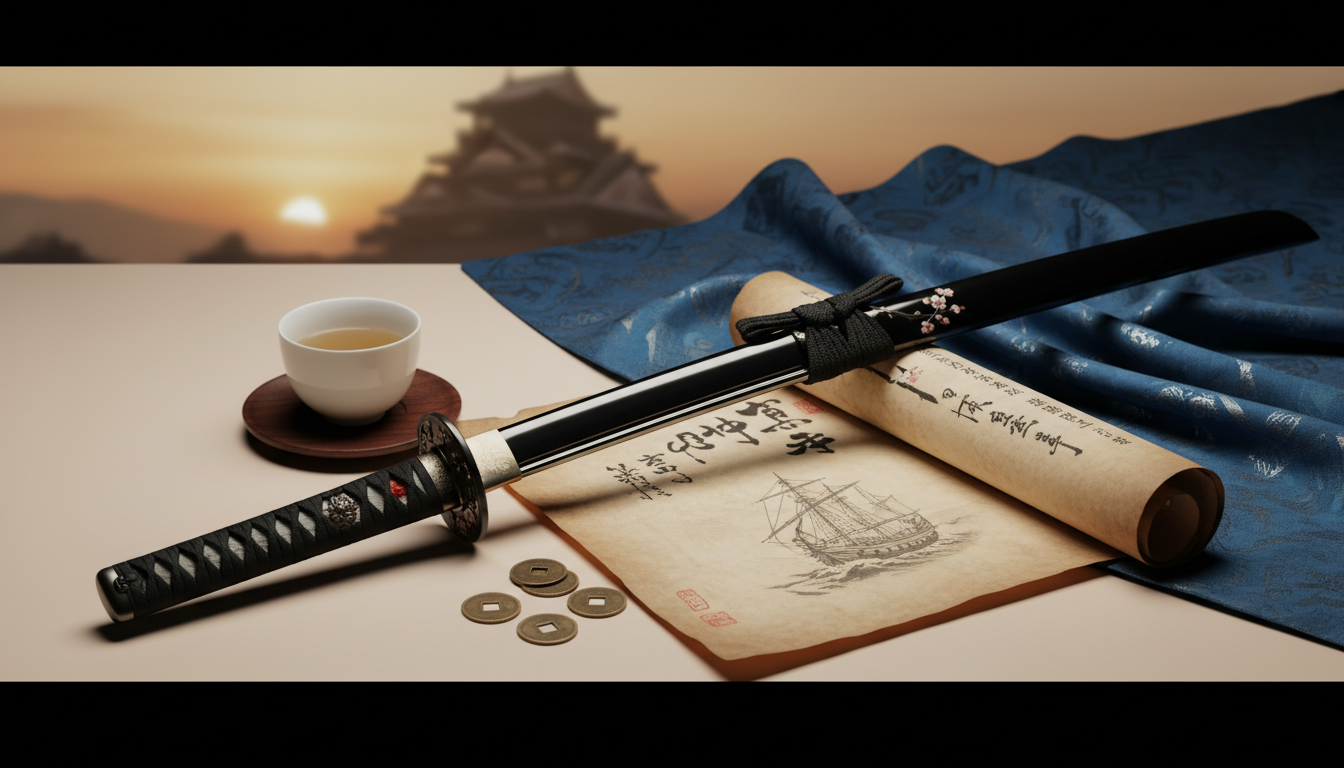
What is James Clavell’s Shōgun?Shōgun is a monumental 1975 historical fiction novel written by James Clavell, serving as the chronological first installment in his acclaimed Asian Saga. Set in feudal Japan in the year 1600, the narrative follows John Blackthorne, a bold English maritime pilot whose ship, the Erasmus, wrecks on the Japanese coast. Thrown into a deeply unfamiliar and highly ritualistic society, Blackthorne becomes an unwitting pawn—and eventually a crucial player—in a deadly political game orchestrated by Lord Yoshi Toranaga, a brilliant daimyo maneuvering to become the supreme military dictator, or Shōgun. The novel masterfully weaves themes of cultural assimilation, the clash between East and West, political intrigue, and the uncompromising samurai code of Bushido.
As a cornerstone of historical fiction, Shōgun demands a deep understanding of its multi-layered narrative. Whether you are a literary student, a fan of the recent television adaptations, or an author analyzing world-building, this definitive guide explores the plot, characters, and underlying themes of Clavell’s masterpiece. For storytellers and authors looking to craft similarly expansive and meticulously researched historical epics, partnering with a premier agency like Vox Ghostwriting ensures your narrative achieves the necessary depth, authenticity, and engaging structure to captivate readers globally.
The Historical Tapestry: Setting the Stage for Clavell’s Masterpiece
To fully grasp the magnitude of Shōgun, one must first understand the volatile era in which it is set. The novel takes place at the tail end of the Sengoku Jidai, or the Warring States period, a century-long era of relentless military conflict and social upheaval in Japan. The country is nominally ruled by the Emperor, but true power lies with the samurai class and their regional lords, the daimyo.
Prior to the novel’s opening, a supreme leader known as the Taiko (historically Toyotomi Hideyoshi) had unified Japan. However, upon his death, he left behind an underage heir. To ensure peace until the boy comes of age, the Taiko established a Council of Regents—five powerful daimyo tasked with ruling cooperatively. Naturally, ambition shatters this fragile peace. The council is split into two primary factions: one led by the cunning and patient Lord Yoshi Toranaga, and the other by the bureaucratic and fiercely ambitious Ishido Kazunari. It is into this precise powder keg of political instability, religious tension (stoked by Portuguese Jesuit priests), and impending civil war that the English Protestant pilot John Blackthorne unwittingly sails.
Comprehensive Shōgun Plot Summary: A Clash of East and West
James Clavell structures Shōgun as a sprawling, multi-perspective epic. The plot can be divided into several distinct phases, tracking Blackthorne’s evolution from a despised outsider to a respected samurai, parallel to Toranaga’s masterstroke ascension to absolute power.
Arrival in a Hostile Land: The Erasmus Shipwreck
The novel begins with desperation. The Dutch trading ship Erasmus, piloted by the Englishman John Blackthorne, washes ashore in a small Japanese fishing village called Anjiro. The crew is starving, diseased, and immediately taken captive by the local samurai, led by the cruel but pragmatic Omi and his liege lord, Kashigi Yabu. Blackthorne is horrified by the seemingly barbaric customs of his captors, who behead a man simply for disrespect, yet are obsessively clean and polite.
Blackthorne’s arrival threatens the established order. For decades, the Portuguese have maintained a monopoly on Western trade with Japan, kept secret from the rest of Europe. Furthermore, Portuguese Jesuit priests have converted several powerful daimyo to Catholicism. As a Protestant, Blackthorne is branded a pirate and a heretic by the Jesuits, who urge the Japanese to execute him. However, his knowledge of the world, mathematics, and global geography makes him a valuable asset to the local lords.
The Political Chessboard: Toranaga vs. Ishido
Word of the “barbarian” reaches Lord Yoshi Toranaga, the President of the Council of Regents, who summons Blackthorne to Osaka Castle. Toranaga is currently trapped in Osaka, surrounded by Ishido’s forces and facing an impending impeachment by the Council, which would mean forced ritual suicide (seppuku) for him and his entire clan.
Toranaga recognizes Blackthorne—whom he names Anjin (Japanese for “pilot”) because his real name is too difficult to pronounce—as a unique weapon. The Anjin’s hatred for the Portuguese and his knowledge of their secret bases and the highly lucrative “Black Ship” trade route provide Toranaga with leverage against the Christian daimyo. Through a series of brilliant, high-stakes bluffs, Toranaga manages to escape Osaka Castle with Blackthorne in tow, setting the stage for an open military conflict.
Cultural Assimilation: Blackthorne Becomes Anjin-san
The middle section of the novel is a profound exploration of cultural immersion. Toranaga assigns Lady Toda Mariko, a brilliant, beautiful, and Catholic-converted noblewoman, to act as Blackthorne’s interpreter and tutor. Under Mariko’s guidance, Blackthorne begins to learn the Japanese language, customs, and philosophies.
- Hygiene and Diet: Blackthorne abandons his European aversion to bathing, embracing the daily hot bath, and transitions from a meat-heavy diet to one of fish, rice, and vegetables.
- Emotional Control: He learns the concept of wa (harmony) and the necessity of hiding one’s true emotions behind a polite facade.
- Understanding Karma: He adopts the fatalistic Japanese view of life and death, accepting that a person’s destiny is out of their hands, which brings him a profound sense of inner peace.
As Blackthorne sheds his European prejudices, he and Mariko fall deeply in love. Their forbidden romance is fraught with danger, as Mariko is married to Buntaro, a fierce and highly traditional samurai who despises the Anjin.
The Climax: War, Betrayal, and the Crimson Sky
Toranaga enacts his master plan, codenamed “Crimson Sky,” a massive military push toward Kyoto. However, the plan requires absolute secrecy and endless deception. Toranaga even fakes a surrender, allowing his most loyal generals to commit seppuku to sell the ruse to Ishido.
The climax centers on Mariko. Toranaga sends her to Osaka Castle to challenge Ishido’s hostage situation. By demanding to leave, Mariko forces Ishido’s hand: if he lets her go, all other hostages will demand the same, destroying his leverage; if he stops her, he publicly shames a noblewoman, turning the samurai against him. When Ishido’s ninja attack her quarters to capture her, Mariko sacrifices herself to protect Blackthorne and her lord’s honor. Her death fractures Ishido’s alliance.
In the aftermath, the Battle of Sekigahara takes place (largely off-page), where Toranaga emerges victorious. Blackthorne’s ship, the Erasmus, is mysteriously burned. In the novel’s closing paragraphs, Toranaga’s internal monologue reveals the ultimate truth: he ordered the ship burned to keep Blackthorne in Japan, valuing the Englishman’s friendship and recognizing that building a new ship will keep the Anjin occupied. Toranaga’s ultimate goal is realized—he becomes Shōgun.
Key Character Analysis: The Heart of the Asian Saga
Clavell’s characters are complex, morally ambiguous, and deeply human. Below is a detailed breakdown of the primary figures in the novel.
| Character Name | Historical Counterpart | Role & Motivation in the Novel |
|---|---|---|
| John Blackthorne (Anjin) | William Adams | The protagonist. An English pilot who transforms from an ethnocentric European into a culturally hybridized samurai. Driven by survival, duty to his country, and eventually, love for Mariko and loyalty to Toranaga. |
| Lord Yoshi Toranaga | Tokugawa Ieyasu | A brilliant strategist and master manipulator. He views the world as a falconer views his birds. His ultimate, unspoken goal is to become Shōgun to unify Japan and end the era of war. |
| Lady Toda Mariko | Hosokawa Gracia | A tragic, intelligent noblewoman caught between her Catholic faith, her samurai duty, her disgraced family lineage, and her love for Blackthorne. She is the crucial bridge between East and West. |
| Ishido Kazunari | Ishida Mitsunari | Toranaga’s primary political rival. A former peasant who rose to power through military prowess and bureaucratic efficiency under the Taiko. He lacks Toranaga’s noble bloodline and strategic patience. |
| Kashigi Yabu | Honda Masanobu (loosely) | A treacherous, sadistic, yet fascinating daimyo of Izu. He is obsessed with the nature of death and constantly plays both sides of the Toranaga/Ishido conflict to maximize his own power. |
Exploring the Core Themes of Shōgun
Beyond the political intrigue and maritime adventures, Shōgun is a deeply philosophical novel that tackles profound universal themes. Clavell uses the historical setting to explore the human condition, making the book a staple in literary discussions regarding cultural relativism.
Culture Shock and Relativism
The most prominent theme is the collision of cultures. Initially, Blackthorne views the Japanese as “savages” due to their casual relationship with death and lack of Christian morals. Conversely, the Japanese view Blackthorne as a filthy, uneducated “barbarian” who doesn’t bathe and lacks emotional control. Through Blackthorne’s journey, Clavell masterfully argues for cultural relativism—the idea that a person’s beliefs and practices should be understood based on that person’s own culture, rather than judged against the criteria of another.
Duty, Honor, and the Bushido Code
The concept of Bushido (the Way of the Warrior) dictates every action in the novel. For the samurai, duty to one’s lord supersedes all else—including one’s own life, spouse, and children. Clavell explores the extreme consequences of this code. Characters routinely commit seppuku to preserve their honor, protest a lord’s decision, or atone for failure. Blackthorne struggles to comprehend this initial disregard for life, eventually realizing that it stems from a profound respect for honor and societal order.
Power, Manipulation, and Destiny (Karma)
Toranaga embodies the theme of power. He is the ultimate Machiavellian figure, though his manipulations are framed within the context of Japanese duty rather than Western malice. He uses everyone—including Mariko’s life and Blackthorne’s ship—as pieces on a Go board. Intertwined with this is the Buddhist concept of Karma. The Japanese characters accept their fates with a stoic phrase: “Shikata ga nai” (It cannot be helped). Blackthorne’s eventual acceptance of his karma marks his true transition from a Westerner trying to control nature to an Easterner flowing with it.
Real-World Historical Counterparts: Fiction vs. Reality
One of the reasons Shōgun resonates so powerfully is its firm grounding in actual historical events. Clavell heavily researched the period, though he changed names and condensed timelines to serve the narrative pacing.
- William Adams (Blackthorne): Adams was indeed the first Englishman to reach Japan in 1600. He became a trusted advisor to Tokugawa Ieyasu, helped build Western-style ships, and was granted the title of samurai, living out his days in Japan.
- Tokugawa Ieyasu (Toranaga): The founder of the Tokugawa Shogunate, which ruled Japan in relative peace for over 250 years until the Meiji Restoration. Ieyasu was known for his incredible patience and strategic brilliance.
- Hosokawa Gracia (Mariko): A noblewoman whose father betrayed Oda Nobunaga (the predecessor to the Taiko). She converted to Christianity and died tragically during a hostage crisis orchestrated by Ishida Mitsunari, much like in the novel.
Expert SEO Perspective: By weaving real historical entities into a fictionalized narrative, Clavell achieved a high degree of topical authority in his storytelling. He didn’t just write a story; he built a living, breathing ecosystem of 17th-century Japan. This level of semantic richness—incorporating accurate terminology like koku (a measurement of rice/wealth), ronin (masterless samurai), and eta (the untouchable caste)—is exactly what modern search algorithms look for when determining the depth and helpfulness of content.
Why Shōgun Remains a Pinnacle of Historical Fiction
Decades after its publication, Shōgun continues to influence modern media, evident in the critically acclaimed 2024 FX television adaptation. Its enduring legacy lies in Clavell’s ability to make a completely foreign world accessible and thrilling to Western readers. He does not spoon-feed the culture; he throws the reader into the deep end alongside Blackthorne, forcing us to learn the rules of survival in feudal Japan in real-time.
The novel is a masterclass in shifting perspectives. Clavell frequently jumps from the mind of Blackthorne to Toranaga, to Yabu, and to the Jesuit priests. This omniscient viewpoint allows the reader to see the vast web of conspiracies that no single character fully grasps. It creates an incredible sense of dramatic irony and tension. Writing a narrative with such structural complexity requires immense skill. Authors aspiring to manage multiple POVs and complex historical world-building often rely on expert editorial guidance. Working with seasoned professionals, such as those at Vox Ghostwriting, can help structure these massive narratives without losing the emotional core of the protagonist’s journey.
Frequently Asked Questions About James Clavell’s Shōgun
Is Shōgun based on a true story?
Yes, it is heavily inspired by true historical events. The core narrative is based on the life of William Adams, an English navigator who arrived in Japan in 1600 and became a key advisor to Tokugawa Ieyasu, the daimyo who would unify Japan and become Shōgun. While the major political events and cultural depictions are historically accurate, Clavell fictionalized the characters’ names, personalities, and specific interpersonal dramas to create a more compelling novel.
What does the title “Shōgun” actually mean?
In Japanese history, a Shōgun was a military dictator appointed by the Emperor. While the Emperor held nominal and spiritual authority, the Shōgun held the actual political and military power. The term is an abbreviation of Sei-i Taishōgun, which translates roughly to “Commander-in-Chief of the Expeditionary Force Against the Barbarians.”
How long is the Shōgun novel?
Shōgun is an epic tome. Depending on the edition and formatting, the novel typically runs between 1,100 and 1,200 pages, containing over 400,000 words. Despite its massive length, the intricate plotting, constant life-or-death stakes, and rich character development maintain a relentless, gripping pace.
Why did Toranaga burn Blackthorne’s ship?
In the novel’s final revelation, it is disclosed that Toranaga secretly ordered the burning of the Erasmus. He did this for two reasons: first, to appease the Christian daimyo who wanted the Protestant ship destroyed, thereby securing their loyalty for the upcoming war; and second, to ensure Blackthorne could never leave Japan. Toranaga valued Blackthorne’s friendship and knowledge, and knew that ordering him to build a new ship would give the Anjin a new purpose and keep him tied to Toranaga’s service.
What is the “Asian Saga”?
The Asian Saga is a series of six novels written by James Clavell, exploring the interaction between Western and Asian civilizations over several centuries. While Shōgun is the first chronologically (set in 1600), it was the third book published. The other books in the series include Tai-Pan, Gai-Jin, King Rat, Noble House, and Whirlwind. Each novel stands alone but shares thematic elements and ancestral lineages of characters.