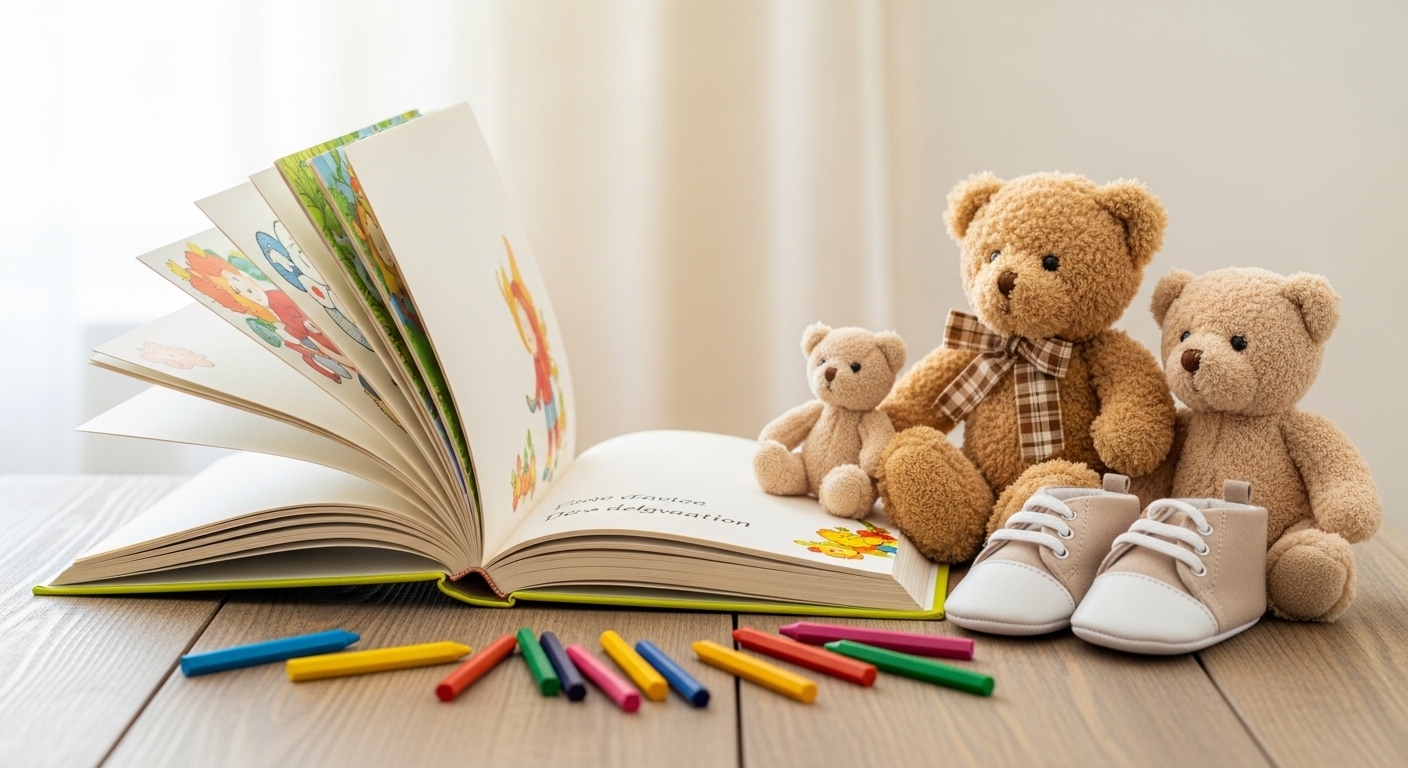
Gifting a book to a toddler is more than handing over pages bound in a cover—it’s giving a world they can hold in their hands. Whether you’re writing a personalized message in a published book or creating a completely original story for a toddler in your life, the words you choose can help spark their imagination, comfort their fears, and foster a love of reading that will last a lifetime.
But what exactly should you write for such a young, developing mind? This guide dives into what makes the perfect toddler-friendly message or book—from heartfelt notes to simple narratives—and how you can ensure your work is polished and impactful through proper editing, proofreading, and, if needed, publishing support.
1. Begin with the Heart: Personal Messages That Matter
Even if you’re not writing the entire book yourself, a personal inscription can transform an off-the-shelf children’s book into a keepsake.
What to Include:
- A short, sweet message of love: “To Emma, may you always dream big and believe in magic.”
- The occasion: “Happy 2nd Birthday!”
- A memory or inside joke: “Remember how we sang ‘Old MacDonald’ all day at the zoo?”
- A note about the future: “One day, you’ll read this to your own little ones.”
Pro Tip: Keep the message brief, warm, and age-appropriate. Use simple language, even in your inscription—it may be read aloud to the child again and again.
2. Writing an Original Toddler Book: Structure, Style & Soul
If you want to create a book from scratch, keep in mind toddlers are just beginning to grasp language. They rely heavily on rhythm, visuals, and repetition to understand and enjoy stories.
Elements to Focus On:
- Length: 100 to 400 words total. Simple sentences, ideally under 10 words each.
- Tone: Warm, cheerful, curious. Avoid sarcasm or ambiguity.
- Repetition: Toddlers thrive on it. Think of “Brown Bear, Brown Bear” or “Goodnight Moon.”
- Phonetics: Play with sounds. Onomatopoeia (e.g., “splash,” “zoom,” “moo”) is fun and educational.
Example Structure:
- Opening: Introduce the main character quickly. (“This is Max. Max is a happy fox.”)
- Journey or Action: A mini adventure or discovery. (“Max wants to find a friend.”)
- Resolution: End on warmth, love, or achievement. (“And now Max has a best friend to play with every day!”)
Extra Tip: Use predictable patterns. “Where is the cat? Is she under the hat?” helps toddlers anticipate and participate.
3. Character & Theme Ideas Toddlers Love
Writing for toddlers doesn’t require complex plots. Instead, aim for themes they can emotionally and cognitively grasp.
Popular Themes:
- Bedtime routines
- Making new friends
- Trying something for the first time
- Family love (parents, grandparents, siblings)
- Animal adventures
- Shapes, colors, or numbers
Character Ideas:
- A talking teddy bear
- A brave bunny who explores the backyard
- A kitten who learns to share
- A penguin who doesn’t like the cold
- A dinosaur who loves to read books
Keep character names short and rhythmic: Lulu the Ladybug, Ben the Bear, Tina the Turtle.
4. Language That Connects with Toddlers
Your language should feel like a melody. Toddlers are developing both receptive (understanding) and expressive (speaking) language skills. Here’s how to write in a way that supports both:
- Use repetition and rhyme: Helps build memory and vocabulary.
- Simple sentence structure: “Tom is big. Tim is small.”
- Interactive cues: “Can you find the red ball?” or “Say ‘moo’ like the cow!”
Pro Tip: Use familiar words. Replace “automobile” with “car” or “canine” with “dog.”
5. Using Editing and Proofreading for Clarity and Flow
Just because the book is for toddlers doesn’t mean it should be casually written. Simplicity requires precision, and sloppy errors—even in a book for toddlers—can confuse the message or interrupt the rhythm.
Why It Matters:
- Grammatical accuracy builds trust with parents and educators.
- Clear syntax ensures toddlers are learning correct language use.
- Polished rhythm and rhyme feel more professional and enjoyable to read aloud.
What to Check:
- Is the rhyming pattern consistent?
- Do all the verbs match the tense?
- Are the words too advanced for ages 1–3?
- Have any visual cues (for illustrators) been included clearly?
If you’re creating your own storybook for a toddler, consider using editing and proofreading services—especially if you’re planning to publish or gift multiple copies.
6. When to Consider Publishing Your Toddler Book
You don’t have to be a professional author to create a book worth printing. Maybe it’s for a godchild’s birthday. Maybe it’s a family project. Whatever your reason, turning your writing into a physical book can make it truly special.
Publishing Options:
- Print-on-demand platforms for personal copies
- Custom board books for toddler-friendly formats
- Self-publishing services if you’re creating a larger run
- Professional publishing help to format, design, and produce a polished book
Why It’s Worth It:
- Books last longer than digital files
- Gifting a printed book feels more personal
- Children love turning real pages
- Can be passed down as a keepsake
If you’re unsure how to format the interior or design a toddler-friendly cover, consider hiring a children’s book editor or layout specialist.
7. Visuals & Illustrations: Writing with the Picture in Mind
Even if you’re “just the writer,” visuals are everything in toddler books. Write with imagery in mind.
Write with illustrations in mind:
- Include visual suggestions in brackets:
(“The cat [sleeping in a basket] purrs quietly.”) - Use descriptive but short phrases:
(“A red apple sits on the green grass.”)
If Collaborating with an Illustrator:
- Share a moodboard or sample art style
- Provide consistent character descriptions
- Suggest page breaks after every sentence or scene
Tip: If you’re not hiring a professional illustrator, there are free tools for basic design—but for long-term quality, a children’s book illustrator can bring magic to your manuscript.
8. Make It Last: Adding a Dedication or Growth Element
Toddlers grow fast. Including something that will resonate over time can make your gift even more powerful.
Examples:
- “This book was written just for you, Lily. One day, you’ll read it to someone special too.”
- Include blank pages at the back for family notes or photos.
- Leave space for the toddler’s drawings or favorite memories.
These touches make the book more than a story—it becomes a personal time capsule.
9. Final Checklist Before Gifting or Publishing
Before wrapping up your toddler book project, make sure you’ve:
✅ Used age-appropriate language and themes
✅ Maintained a consistent structure and tone
✅ Ensured repetition, rhythm, or rhyme where suitable
✅ Included clear cues for illustrations
✅ Proofread for flow, sound, and simplicity
✅ Considered formatting and design for print
✅ Added a personal dedication or note
If you’re going to publish or print the book, it’s highly recommended to go through professional editing and formatting services to ensure the highest quality and readability.
Conclusion: Little Words, Big Impact
Writing in a book for a toddler—whether it’s a short dedication or a full original story—can have an incredible impact on a young child’s world. These tiny humans are just beginning to experience language, emotion, and story. Your words, thoughtfully chosen, can nurture their curiosity, comfort their feelings, and create memories that stretch far into the future.
So whether you’re writing a line, a rhyme, or a tale full of charm, remember: a toddler may not remember the exact words today—but they’ll always remember how it made them feel.
FAQs
Q1: Can I write a storybook for a toddler even if I’m not a writer?
Absolutely! Simplicity is key, and heartfelt stories often come from personal inspiration.
Q2: How long should a toddler book be?
Keep it under 400 words, with short, rhythmic sentences that are easy to follow.
Q3: Should I hire an editor for a toddler book?
Yes—professional editing ensures your story is clear, error-free, and appropriate for the age group.
Q4: What’s the best format for printing a toddler book?
Board books or large softcovers with durable pages are toddler-friendly formats.
Q5: Can I include a personal message in a published book gift?
Definitely! A short handwritten note on the inside cover adds sentimental value.